The rapid growth of technology in Southeast Asia is impacting the global market.
During the global economic crisis, people began to rely more on digital technologies in their daily lives, resulting in the emergence of new technological trends.
Key technology trends in Southeast Asia that will impact the world:
Content:
VR and AR technologies
Interacting with data has become more accessible, thanks in part to virtual, augmented, and mixed reality, technologies that were once considered science fiction. New digital innovations have made it possible to create realistic simulations and scenarios that don’t require expensive resources. Augmented reality (AR) and virtual reality (VR) developments allow users to fully immerse themselves in the digital world, perceiving and manipulating data.
According to Statista, the global AR and VR market size reached $28 billion in 2021, and current analysts predict that the AR and VR market will grow to $250 billion by the end of 2028. The technology is widely used in education to help students understand the practical aspects of theory, especially in the healthcare sector, where it helps surgeons practice performing surgeries.
Wi-Fi 6 and 5G
The global rollout of 5G continues, improving mobile broadband and delivering faster download speeds. Southeast Asia is seeing widespread adoption of 5G. The latest iteration, Wi-Fi 6, is currently in development and is similar to 5G except that it replaces the older 6 GHz frequency, allowing for higher bandwidth internet. Those working in large corporations will be able to enjoy stable, high-speed internet without any lag. However, it will take some time before 5G and subsequent upgrades are rolled out worldwide.
A recent study by Deloitte found that 86% of network technology executives believe that advanced wireless technology will bring significant changes to their organization in the next three years. Faster, next-generation connection speeds will help get work done faster in less time.
3D printing
3D printing, also known as additive manufacturing, has become the number one alternative to traditional manufacturing processes. Unlike older manufacturing methods, 3D printing creates three-dimensional objects by layering materials to create the desired result.
Thermoplastics such as acrylonitrile butadiene styrene (ABS), metals, resins, and ceramics are the most commonly used materials for 3D printing. The method is very cost-effective, productive, and potentially environmentally friendly. One real estate development firm saved construction workers time and built an entire net-zero energy community in California’s Coachella Valley.
According to analytics from Grand View Research, the global 3D printing market is likely to be worth $76.17 billion by 2030, growing at a CAGR of over 20.8% from 2022 to 2030.
Data Trust Models
According to Accenture analytics, the number of cyberattacks in the world has increased significantly. Earlier, in the period from 2021 to 2022, a 125% increase in cyberattacks was recorded. As more users consume more data, the number of database leaks has increased at the same time. Leaks have affected many large and small companies, forcing them to strengthen cybersecurity to prevent future attacks.
The rise of cyber-attacks has led to the introduction of data trust models as a new approach to security by using an independent third party to ensure proper data management rather than monopolization. This allows organizations to securely connect their data and create a new common data repository.
Computing as a Service
Computing as a service is a cloud technology that allows you to allocate space on a server rather than on your local computer hard drive. In recent years, cloud computing has brought about a major change in data storage for large corporations and even personal computers, as it helps reduce local network congestion. Users can easily access available software applications and pay for the amount of disk space or capacity they need using a subscription plan.
With the rise of edge computing—services that offer decentralized data storage through their architecture rather than software—computing is likely to see a surge in usage in the coming years. According to Grand View Research, the edge computing market is expected to reach $155.9 billion by 2030, growing at a CAGR of 38.9%.
Moreover, according to research from Analysys Mason, the majority of leading operators (87%) believe that edge computing is a “top strategic priority” for their company in the near future.
In today’s fast-paced business world, keeping up with the top technology trends can be challenging. While the article above highlights some of the top 2023 tech trends in Southeast Asia to keep an eye on, others are likely to emerge as the digital landscape continues to evolve.
AR, VR and blockchain technologies will be some of the top tech trends of the year as more startups embrace the power of digitalization and blockchain as they continue to develop their products and services for our current and future digital world.
Discover the fascinating aspects of DeepSeek, which leaves many platforms behind with its advanced features.
As artificial intelligence technologies rapidly develop, DeepSeek is one of the most prominent platforms in this field. DeepSeek has established itself particularly in natural language processing (NLP) and AI-assisted text generation, offering a variety of solutions for both individuals and businesses. In this article, we examine in detail what DeepSeek is, how it’s used, its advantages and disadvantages, and its competition with ChatGPT.
What is DeepSeek?
How to Use DeepSeek?
Advantages of DeepSeek
Disadvantages of DeepSeek
DeepSeek’s Competition with ChatGPT
Is DeepSeek Completely Free?
Deepseek Banned in Italy
What is DeepSeek?
DeepSeek utilizes artificial intelligence technologies to provide services in text generation and natural language processing. Deep learning models trained on large datasets allow it to generate human-like text. This platform is particularly used for content creation, translation, coding, educational material development, and similar text-based needs. While DeepSeek doesn’t yet support Turkish in its interface, it successfully answers Turkish questions or commands. Its user-friendly interface and flexible integration options, along with its free nature, make it easy to use for both individuals and businesses.
How to Use DeepSeek?
Advantages of DeepSeek
DeepSeek offers many advantages with its features. First and foremost, its Turkish language support when answering questions is a great convenience for local users. This is a significant advantage, especially for users with text generation and processing needs. Thanks to its deep learning models, the platform completes even complex tasks quickly and efficiently, helping users save time.
DeepSeek can be used in a variety of areas, including content creation, translation, coding, and training material creation. This versatility makes the platform appealing to a wide range of users. Its user-friendly interface makes it easy for anyone to use without requiring technical knowledge. Furthermore, thanks to its more cost-effective API support compared to ChatGPT, it can be easily integrated with other applications, providing a significant advantage for businesses.
Disadvantages of DeepSeek
DeepSeek offers several advantages, but it also has some drawbacks. First, the text generated can sometimes be insufficiently original, especially on very specific topics. Furthermore, deep learning models can sometimes struggle to fully understand context, leading to inaccurate output. Privacy concerns can also be a drawback for users. Uncertainty about how user data is used and stored creates significant user uncertainty. Finally, unlike other models, DeepSeek currently lacks visualization and voice chat capabilities.
DeepSeek’s Competition with ChatGPT
DeepSeek has emerged as a serious competitor to market leader ChatGPT, surpassing ChatGPT as one of the most downloaded AI applications, particularly in the US Apple App Store. DeepSeek’s competitive advantages include offering performance comparable to premium versions of other platforms with its free features and its ability to provide more complex answers to specific topics thanks to its greater number of parameters compared to ChatGPT.
Is DeepSeek Completely Free?
DeepSeek, based in China, currently offers its advanced features completely free. While it lacks ChatGPT’s visual rendering and voice chat features, offering key features like API support at a lower price has already made DeepSeek a popular AI platform, especially for businesses.
Deepseek Banned in Italy
While AI platforms make life easier for users, they also collect, store, and use user data for platform development. The biggest problem is the security of this data. US-based platforms like ChatGPT state that they never share this data with third parties, and the US government has taken measures to protect users in this regard. However, platforms like Deepseek lack confidence in the security of this data because some countries, like China, lack legal regulations to protect users. Consequently, platforms like Deepseek are causing concern for users, especially European countries. For this reason, the first access ban to Deepseek came from Italy, while it was expected from the US. The reason for this ban is the security of user data.
The labour market has been changing rapidly and continuously in recent years. Technological advances, globalisation, demographic shifts and unexpected challenges such as the pandemic have dramatically changed not only the way we work but also the skills required of employees. Lithuania, like many other countries, is experiencing a labour market transformation that affects both employers and employees in all sectors – from public services to technology and customer service.
Keeping up with labor market trends has become a necessity for those who want to not only stay competitive but also successfully plan their careers. For employers, this means rethinking hiring, work organization, and employee retention strategies. For employees, it means the need for continuous learning and adaptability. In this article, we look at the key trends shaping the future of the labor market and how to prepare for the changes that are already underway.
The Impact of Technology on the Labor Market
Technology is already having a huge impact on the organization of work, the demand for professions, and the disappearance of some of them. Artificial intelligence (AI), automation, cloud computing, digital tools, and remote work platforms are radically changing the structure of the labor market. These changes not only optimize processes, but also raise new questions about the role of humans in the economy of the future.
Artificial Intelligence and Automation
AI can already perform tasks previously reserved for humans, from data analysis to text generation and customer service. In many areas, AI is helping to automate repetitive, rule-based tasks, such as financial analysis, logistics planning, and even primary medical diagnostics. This means that some jobs, especially those involving data processing or administrative work, are gradually disappearing or being transformed.
However, the role of humans remains critical in areas that require creativity, empathy, complex decision-making, and strategic thinking. AI can be a powerful assistant, but decision-making, interpersonal communication, and leadership are areas where human value is irreplaceable. Therefore, the transformation of the labor market encourages people to develop skills that complement technology rather than compete with it.
Remote work and digital platforms
Remote work has also significantly changed the labor market, especially after the COVID-19 pandemic. Employers are increasingly choosing hybrid models, and employees value flexibility, the ability to work from anywhere in the world, and a better work-life balance. Platforms such as Zoom, Slack, Microsoft Teams, Trello, and Upwork have become an integral part of everyday work.
However, this shift also brings new challenges. Employers must ensure data security, encourage remote teamwork, and maintain productivity. Employees, in turn, must manage their time effectively, communicate virtually, and adapt to a digital work environment.
The labour market is becoming increasingly global – companies are hiring from different countries, and competition for talent is increasing. As a result, digital literacy and intercultural skills are becoming increasingly necessary for those who want to succeed in the future labour market.
How to Prepare for the Future of the Job Market
The future job market promises many changes, so both employees and employers need to act now. Whether you’re a young professional starting out in your career or an experienced manager, preparing for the future means embracing change, learning continuously, and thinking strategically. Here are practical tips for both.
Tips for Employees Create a Personal Brand
In the context of globalization, online visibility is becoming important for everyone. A professional profile on LinkedIn, a personal blog or a portfolio of projects allow you to clearly demonstrate your value. A personal brand reflects your knowledge, skills and values, helps you stand out among candidates and attract the attention of employers.
Invest in training and development
It is no longer enough to rely solely on existing qualifications – the changing labour market requires constant updating of knowledge. Online courses, seminars, refresher courses or even self-study can significantly improve your career prospects. Skills related to digital technologies, data analysis and project management are especially valued.
Be open to change and mobility
Flexibility is one of the key qualities that helps you adapt to changing labor market conditions. Be prepared to change your career path, retrain, or work in international teams. The ability to quickly master new technologies or work models (e.g. remote work) becomes a competitive advantage.
Tips for employers Implement flexible working models
Future employees value flexibility, so organizations that offer hybrid or remote work often win the war for talent. Labor market trends show that freedom and trust are not weaknesses, but a way to increase employee productivity and loyalty.
Invest in your team’s competencies
Employers who encourage on-the-job learning ensure their teams are able to keep up with the latest innovations in the labor market. Regular training, mentoring programs, and knowledge-sharing initiatives strengthen both employees and the entire organization.
Take care of the well-being of your employees
Mental health, meaningful work, an inclusive environment, and open communication are not just buzzwords, but real factors that determine team stability. In the future labor market, it is not only the salary that matters, but also the values of the organization and its concern for the well-being of its employees.
Conclusion
The labour market is changing faster than ever – driven by technological innovation, social change and global challenges. This transformation means that the old rules no longer apply and success depends on the ability to adapt quickly, continuously learn and think strategically.
For employees, it’s an opportunity to actively shape their careers, develop both hard and soft skills, and find jobs that offer flexibility and meaning. For employers, it’s a responsibility to build organizations that are future-ready, harnessing the potential of technology while valuing people as their greatest asset.
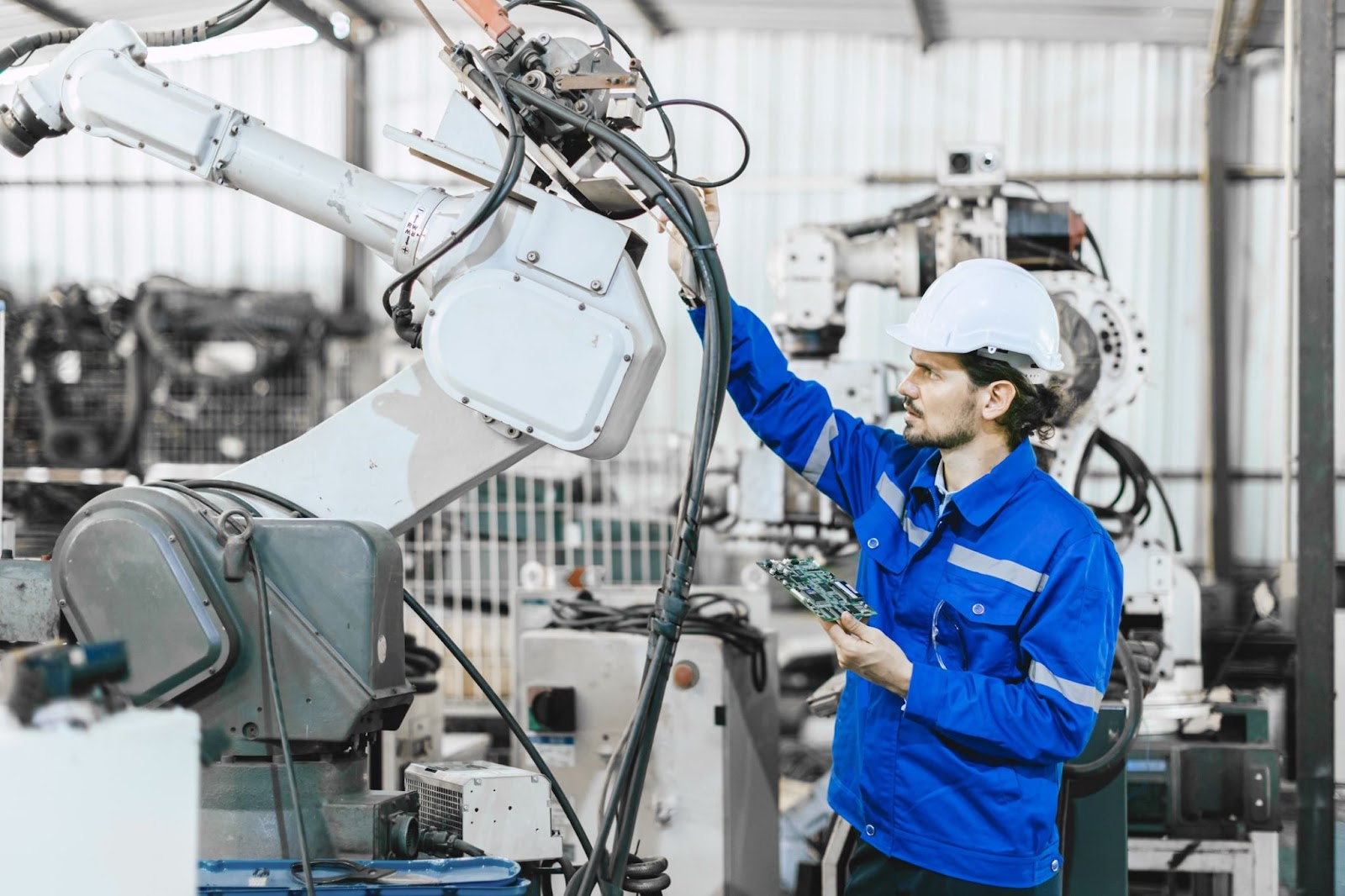
In the vast landscape of the automotive industry, the integration of robots into vehicle manufacturing, a key pillar of automated manufacturing, represents an undeniable revolution.
This transformation is not limited to the way vehicles are assembled, but profoundly alters the very fabric of automotive production, integrating robots into factories to streamline operations.
These industrial robots, with capabilities ranging from automated welding to in-mold assembly and labeling, have become indispensable in automotive factories worldwide. By optimizing processes and setting new standards in manufacturing efficiency, assembly line robots and automated assembly techniques are radically transforming the industry. Their use extends to a multitude of operations, both inside and outside the automotive factory, encompassing material movement,
part inspection, and precision painting. This highlights the versatility and essential role of robotic automation in contemporary automotive manufacturing .
The use of these robots goes far beyond improving operational efficiency or applying smart factory principles; it reflects the industry’s commitment to innovation and the constant pursuit of technological excellence, with assembly line robots at the forefront.
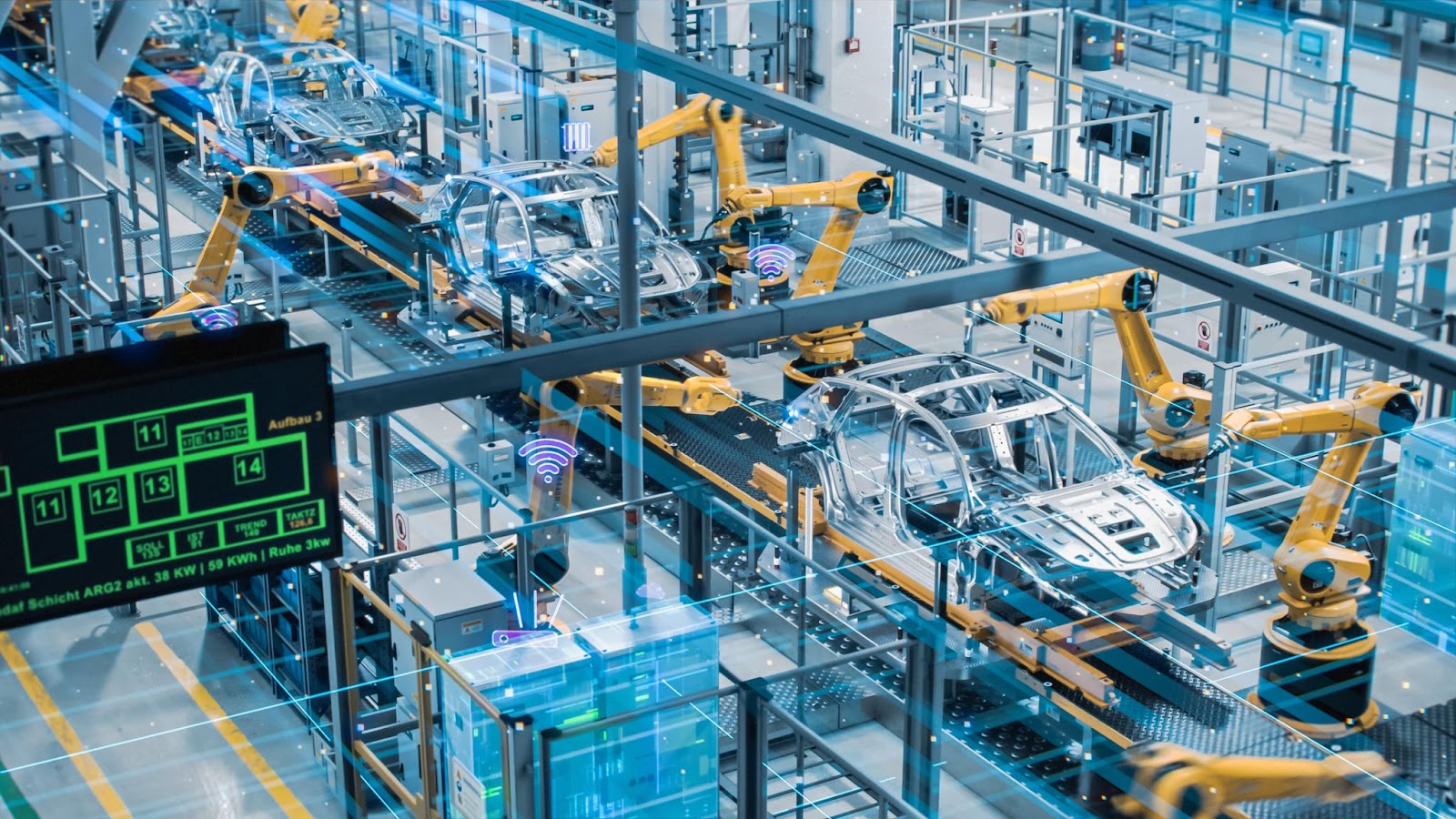
This move toward a more automated, efficient, and intelligent manufacturing landscape heralds a new era for automotive manufacturing. Smart factories and robotic manufacturing,
including automated assembly and assembly line robots, are playing a key role in the transformation and modernization of the industry.
The Evolution of Robotics in Automotive Manufacturing
The evolution of robotics in automotive manufacturing has been characterized by innovation and technological advancements, leading to a significant transformation of the industry.
While the concept of robots dates back to the early 20th century, the modern idea of robots in manufacturing took shape with the introduction of the Unimate robotic arm at a General Motors plant in 1961, marking the beginning of robotic manufacturing in the industrial sector.
The global automotive robotics market is expected to register a compound annual growth rate (CAGR) of around 12% between 2021 and 2027 , driven by several factors, including reduced labor costs, increased investments in production capacity, and the need to accelerate product launches. These trends highlight the growing importance of robotic assembly and assembly line robots in the automotive industry.
Types of robots and their applications
Automotive manufacturing uses two main types of robots: traditional “hard” robotics, used for repetitive tasks, and collaborative robots (cobots), which work in tandem with humans. This approach demonstrates the
industry’s adaptability and commitment to improving efficiency and safety. These robots are deployed for a variety of tasks, including assembly, welding, material handling, and more, demonstrating their versatility and the importance of robotic technology for innovation and productivity in the automotive industry.
Major robotic innovations redefining automotive manufacturing
The significant impact of robotics in the automotive manufacturing industry is evident in significant advances that have reshaped
production processes, increased efficiency, and improved quality. These advances are divided into different application categories, each playing a distinct role in the manufacturing process:
Cobots : Cobots, or collaborative robots, have revolutionized production lines by integrating human cognitive abilities with the precision of machines. They play a crucial role in tasks requiring meticulous handling and complex assembly, thus enhancing the adaptability and flexibility of the production line.
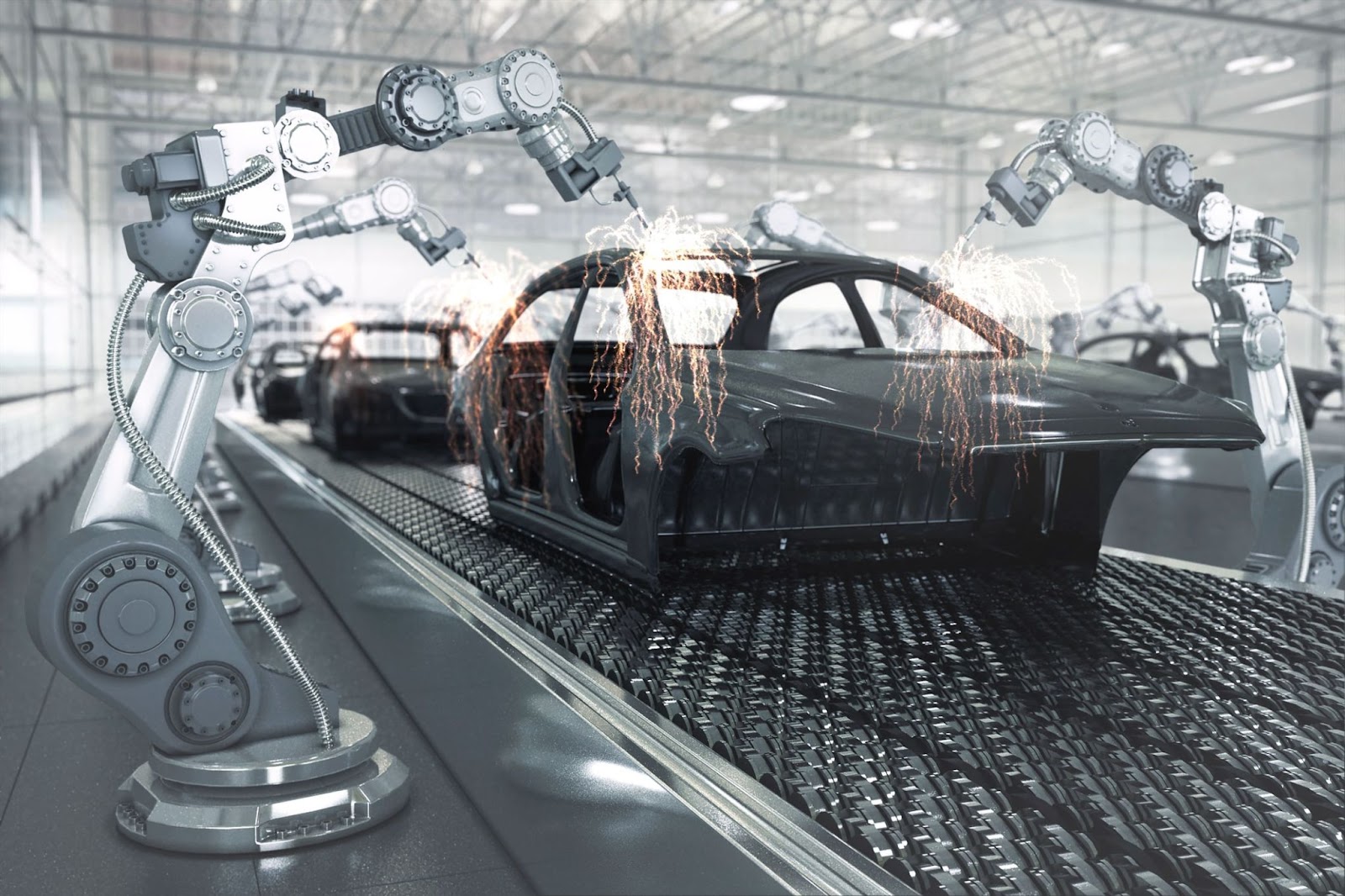
Robotic Painting and Welding : Robotic painting significantly reduces material waste while ensuring uniform coverage, while robotic welding improves productivity and ensures strong, clean welds on various vehicle components.
Handling and quality control : To ensure the timely delivery of parts to the assembly line, robots are used for efficient material handling. Robots equipped with sophisticated vision systems can perform precise quality control, detecting even the smallest defects and ensuring that each component meets rigorous standards. This precision helps reduce production times and improve the overall quality of the automotive manufacturing process during operations such as component transfer, machine setup, and complex cutting and trimming procedures.
These robotic applications highlight the shift towards smarter, more flexible and efficient manufacturing processes, setting new standards for quality and productivity in the automotive industry through the integration of assembly robots and assembly lines.
The impact of robotics on the economy and productivity
The impact of robotics on economics and productivity in automotive manufacturing is multifaceted, encompassing both significant advancements and challenges, as evidenced by the widespread adoption of assembly robots and assembly line robots.
Positive points
Quality and Consistency : Robotics ensures high precision and reproducibility in manufacturing, resulting in consistent product quality.
Productivity and efficiency : Robots can operate 24/7 with an accuracy of up to 0.5 mm, significantly increasing the productivity and efficiency of control systems. This level of precision and efficiency is characteristic of robotic assembly and the use of assembly line robots.
Cost Reduction : Using robots helps reduce labor costs and overhead, thereby generating long-term savings.
Workplace Safety : Robotics improves safety by taking over dangerous tasks and reducing workplace accidents.
Challenges
Initial Investment and Maintenance : High initial costs and the need for sophisticated maintenance require expertise, which can lead to increased ongoing expenses.
Impact on the workforce : The introduction of robotics has led to job displacement within manufacturing and other sectors, highlighting the critical need for reskilling. This challenge underscores the transformative impact of assembly robots and assembly line robots.
Productivity paradox : Despite increasing robot density, some industries are experiencing lower productivity gains, highlighting a complex relationship between automation, robotic assembly, and economic outcomes.
Meeting the challenges of robotics in automotive manufacturing
Addressing the challenges of robotics in automotive manufacturing requires a multifaceted approach focused on cost management, workforce development, and technological adaptability.
Cost management and return on investment
High initial investment and ongoing maintenance costs represent major obstacles. To mitigate these, it is strategic to leverage economies of scale, seek government incentives, and invest in modular robotic systems that offer increased flexibility and lower long-term costs. A prudent approach to robotic assembly is essential. Ensuring sustained production volumes and sales levels is imperative to recoup the initial investment. This requires strategic market analysis and an agile response to automotive industry trends to maintain competitiveness.
Workforce Development
Embracing automation requires a skilled workforce familiar with robotics, software development, and artificial intelligence. Employers must invest in comprehensive training programs and create an environment where workers don’t fear being replaced by robots . They must also partner with educational institutions to fill skills gaps and prepare a new generation of robotics technicians and robotics programming experts.
Promoting diversity and inclusion within the organization, as well as collaborating with businesses and educational institutions, can improve recruitment strategies and prepare the workforce for the changing demands of the automotive industry, ensuring a strong talent pool for robotic assembly.
Technological adaptability
To overcome the limitations of current robotic technologies, it is imperative to invest in research and development to design more adaptable and easily repurposed robots. This includes improving the robots’ ability to adapt to third-party parts and variable control parameters without incurring significant additional costs, which is a key aspect of the evolution of robotic assembly. The new safety risks associated with advanced robotics require the development of new procedures and training to ensure a safe and regulatory-compliant work environment , a critical step for the integration of robotic assembly into industries.
Future Trends in Automotive Robotics
Exploring the automotive robotics horizon reveals a dynamic and transformative landscape, characterized by several key trends poised to redefine the industry through innovative robotic assembly techniques.
Integration of advanced technologies :
Artificial intelligence and machine learning: These technologies improve decision-making processes, automate complex operations, and provide insights from large data sets, increasing the efficiency and adaptability of robots in automotive manufacturing through advanced robotic assembly methods.
Autonomous Vehicles: Thanks to advances in AI, sensor technology, and connectivity, autonomous vehicles are moving from concept to reality and promise to revolutionize the automotive industry by improving safety, efficiency, and the overall driving experience.
Collaborative efforts and sustainability :
Sustainable manufacturing: The adoption of green energy, recycling, and the use of sustainable materials in 3D printing processes demonstrate the desire to adopt sustainable practices in the automotive manufacturing industry. This trend is not only environmentally friendly, but also meets consumer expectations for eco-friendly products and processes.
Collaborative robots continue to gain importance, designed to complement human workers by increasing workplace efficiency, safety, and flexibility.
Emerging robotic applications :
Soft robotics and swarm robotics : These innovative approaches, which exploit soft materials and coordinated multi-robot systems, expand the capabilities of robotics in automotive manufacturing. They enable robots to perform tasks with a level of finesse and cooperation previously unattainable, opening new avenues for the automation and efficiency of robotic assembly.
Conclusion
This exploration of the impact of robots in automotive manufacturing allowed us to see how robotic automation has not only revolutionized vehicle assembly but also set new standards for efficiency, quality, and innovation in manufacturing. The evolution of traditional manufacturing techniques toward the integration of robots in the automotive industry illustrates a dynamic trajectory where technology and sustainability are converging to redefine industry standards. By examining the roles of collaborative robots, the importance of robotic welding and painting, and critically analyzing material handling and quality control, our discussion highlighted the diverse contributions of robotics to automotive manufacturing.
Future trends in automotive robotics, such as the rise of artificial intelligence, the advent of autonomous vehicles, and the focus on sustainability, are paving the way for a dynamic horizon for the automotive manufacturing industry. Reflecting on the shared insights, it becomes clear that the journey of robotics in automotive production is not just about automation, but also about leading change, fostering innovation, and preparing for a future where robotics and human ingenuity collectively propel the industry forward.
FAQ
How are robots transforming manufacturing?
Robots and automation technologies, such as assembly robots and assembly line robots, are revolutionizing the manufacturing industry by improving efficiency, speeding up production, and reducing costs. These automated systems are capable of handling a variety of tasks, freeing up employees to focus on more complex tasks.
What is the role of robots in automotive manufacturing?
In the automotive manufacturing industry, robots, particularly those used in robotic assembly and assembly lines, play a vital role in automating repetitive and precision-demanding tasks. They are used on car assembly lines to precisely position parts, apply adhesives, and perform complex assembly operations, ensuring high-quality production.
What impact will AI have on the automotive industry?
Artificial intelligence is poised to radically transform the automotive industry by introducing fully autonomous vehicles, enabling predictive maintenance, and implementing advanced safety features. AI technologies will enable cars to deliver personalized driving experiences, adapting to each user’s unique preferences.
How does technology influence the automotive industry?
The automotive industry is undergoing a transformation thanks to the adoption of cutting-edge technologies. Automakers are using data and innovative technologies for a variety of purposes, including vehicle simulation testing, improving operational efficiency, predictive maintenance, and developing autonomous vehicles. These advancements significantly improve passenger and vehicle safety.
Do you want to visit Zaragoza? Prefer the beginning of October to attend the Pilar Festival , the largest Spanish festival with international renown. What better way to discover the Aragonese capital than in a crazy festive atmosphere . Because of course, we celebrate religious traditions but Spanish joy invades the streets and it is an explosion of life for a week in Zaragoza .
Origin of the Pilar Festival in Zaragoza
The Basilica of the Virgin of Pilar
The popular celebrations of the Pillar are ancient manifestations of faith in Spain . The devotion to the Virgin Mary , of the apostle James the Greater and his eight disciples in the year 40, gave birth to the Basilica of the Pillar . History tells that the Virgin came to bring a pillar to the apostle so that he could build a religious building on the banks of the Ebro . Some speak instead of an apparition of the Virgin Mary on the pillar . This is why a 48 cm wooden statuette of the Virgin was placed on the famous column in her homage. Also, this pillar is still present in the Basilica of the Virgin of the Pillar of Zaragoza. In addition, it is one of the largest temples in Spain .
The Spanish celebrate the Virgin Mary in Zaragoza
Thousands of believers from all over Spain gather in Zaragoza to celebrate the city’s patron saint : the Virgin of Pilar . The center of attention is the Basilica of Pilar, a monument of great magnitude, with eleven domes and four bell towers. Thus, pilgrims rush to touch the sacred column of the Virgin . The architecture of the basilica has been constantly remodeled to accommodate ever more faithful while always preserving the integrity of the famous pillar of the Virgin. Finally, the last tower added to the complex dates back to 1961.
But the most important of the festivities in homage to the Patron Saint continue in the great Plaza del Pilar and in the streets of Zaragoza .
What is the Pilar Festival?
In fact, we speak of the Pilar Festival in the plural because the event takes place over several days in October and in different locations in Zaragoza . This festival has been declared a Festival of International Tourist Interest since 2019. A week full of colors and celebrations that manifest themselves in various forms, here are the most recurrent:
The Pilar Festival Program
El Pregon : The official speech given by a local celebrity from the balcony of the City Hall. It is the opening of the Pilar festivities .
Flower Offering to the Virgin of Pilar : October 12th is the most important day of the festivities. Indeed, a 15-meter-high structure stands in the center of the Pilar Square. At its top, the great Virgin is represented on a golden column surrounded by flowers . The crowd speaks volumes about the fame of this festival since no less than 200,000 people will come to lay around 7 million flowers in just one day. Most Spaniards, coming from all over Spain to honor the Patron Saint of Hispanidad , dress in their traditional outfits .
The offering of the Cross of Lorraine : a cross of red carnations offered to the Virgin by the Royo Villanova Hospital, formerly a sanatorium in Zaragoza .
Fruit Offering for the Virgin : On October 13, regional houses offer fruit. Approximately 5 tons are collected each year and then donated to various charities in the city.
The procession of the Rosario de Cristal (the crystal rosary or chaplet): an impressive spectacle of all these glass lanterns and colored paper lanterns joyfully parading through the streets of the city accompanied by Spaniards in traditional dress.
The parade of giants Gigantes y Cabezudos represents historical or imaginary characters with enormous heads made of cardboard .
Jota dancers in the city center of Zaragoza (traditional Aragonese jotas).
Music concerts , plays , dance performances , art exhibitions …
A craft market where you can discover Aragonese specialties .
Workshops and activities for children .
Traditional bullfights in the bullring of Zaragoza.
The numerous masses celebrated in the Cathedral of Pilar.
The Corridas of Zaragoza since 1764
The Zaragoza Bullring , the second oldest bullring in Spain , is only used for bullfights twice a year. The rest of the time, thanks to its roof, it serves as a concert hall and exhibition space.
The Plaza de Toros de Zaragoza is a first-class bullring. Serious bullfights take place here, featuring well-presented bulls and renowned bullfighters.
Closing show of the Pilar Festival
A grand fireworks display concludes the Pilar Festival , illuminating the bridge over the Ebro River with the Basilica of El Pilar in the background. In short, it’s the highlight of the show that makes the event even more special. Find the Pilar Festival program on the Zaragoza Tourist Office’s social media.
Offering of flowers to the Virgin of Pilar
In conclusion, if you were to do only one day of the Pilar festival , I recommend you attend the day of October 12 between 7 a.m. and 5 p.m. The day of the Offering of Flowers to the Virgin in the main square of Zaragoza. Throughout the country, it is the Spanish national holiday. It is in fact the most important day of the festivities and the most symbolic. In addition, thousands of people parade in typical costumes from Aragon and other regions of Spain. So, for the Zaragoza festivals , the alleys are colored with wreaths of flowers.
Colorful flowers adorn the lower part of the structure. While the Virgin’s mantle is composed of white gladioli. These mountains of flowers brought by the faithful create a marvelous scene. An unforgettable day with all these crowds thronging the streets and the incomparable Plaza del Pilar. All of Zaragoza is celebrating and the atmosphere that reigns there is unique.
When are the Pilar Festivals in Zaragoza?
The Pilar Festival spans several days of ceremonies in honor of the Virgen del Pilar . Typically, each year, the largest fiesta in Spain takes place in autumn. More precisely, it is the week of October 12th in memory of the date of the Virgin’s apparition to the apostle James. In short, this festival monopolizes and transforms the city into a bustling hive of tradition and joy.
If you want to vary your discoveries and get away from the crowds , go in search of the many street art works of Zaragoza . Even if you are not there for the Urban Arts Festival, you can see all the murals already present in the city.
And finally, to visit Zaragoza without missing anything, read my article on everything to do in Zaragoza on vacation.
If you’re looking for ways to up your game or find a unique niche, you’ve probably heard of AI tutors.
As someone who is passionate about helping people find their path — whether it’s a blog, a side hustle, or a full-time career — I’m excited to share how AI tutors are changing education. They’re not just for students preparing for exams; they’re for anyone who wants to grow, create, and turn their passions into opportunities.
In this article, we’ll look at why AI tutors are changing the game, how they’re breaking down barriers, and why they could be your secret weapon for success. Let’s dive in!
Table of contents
Why AI Tutors Are Transforming Education
How AI Tutors Personalize Your Learning Experience
Breaking Down Barriers: Global Access to Knowledge
How AI Teachers Are Bridging the Gap
Building Confidence and Finding Your Voice
How AI Tutors Boost Your Confidence
The Power of Visual Learning with AI Avatars
From Student to Creator: Transforming Knowledge into Opportunities
Possible problems and ways to overcome them
Conclusion
Why AI Tutors Are Transforming Education
Traditional learning often feels like a one-size-fits-all approach, leaving many of us frustrated or uninspired. However, AI tutors turn this model on its head. These intelligent tools adapt to your unique learning style, pace, and goals, making education personal and inspiring. Whether you’re a student, a professional upskilling, or an entrepreneur building a niche business, AI tutors offer a personalized experience that’s hard to beat.
Here’s why they’re causing a stir:
Personalized learning: AI-powered tutors analyze how you learn and adjust in real time, offering visual aids, repetition, or examples based on your needs.
Universal Access : Available 24/7, they fit into your schedule, whether you’re in a busy city or a remote village.
Accessibility : Many platforms, such as those offering free AI-powered tutors, make high-quality education accessible without breaking the bank.
It’s not just about passing tests – it’s about building confidence and discovering what you’re truly capable of. For me, that’s the heart of finding your niche: understanding your strengths and turning them into something meaningful.
How AI Tutors Personalize Your Learning Experienc
Programmers with charts make chatbot learn data from past results. Chatbot self-learning, virtual assistant training, AI machine learning concept. Bright vivid purple vector isolated illustration
One of the biggest problems with traditional education is that it often ignores how different we all are. Some of us thrive with practical examples, while others need step-by-step explanations. AI tutors solve this problem by creating a learning experience that feels tailored to you.
Some of the key benefits of personalized learning using AI are:
Tailored to your style : Visual learner? You’ll get diagrams and videos. Prefer repetition? The AI will return to concepts until they click.
No Judgment Zone : Having trouble with a topic? AI tutors patiently and without embarrassment give advice, helping you gain confidence.
Goal-oriented support: Whether you’re mastering Python, learning Spanish, or diving into digital marketing, AI adapts to your specific goals.
For example, I’ve seen friends who were once afraid of math find their way with an AI tutor. That spark of understanding didn’t just help them pass the exam — it inspired them to pursue data analysis as a career. When you feel supported, you start to see opportunities, and that’s when your niche starts to take shape.
Breaking Down Barriers: Global Access to Knowledge
AI tutors aren’t just changing how we learn — they’re expanding who can learn. Language and geography used to be huge barriers, keeping people out of entire fields of knowledge. Now, AI tutors are breaking down those barriers, making education truly global.
How AI Teachers Are Bridging the Gap
Seamless language translation : Explore content in any language, easily translated into your native language.
Cultural Relevance : Access lessons from different perspectives, such as learning African history from a Kenyan scholar or business strategy from a Tokyo entrepreneur.
Affordable Global Reach : Free or low-cost AI tools allow anyone with an internet connection to access world-class resources.
Imagine you’re creating a sustainable fashion blog. With the help of an AI tutor, you could translate videos from an Italian course on eco-design into English, or learn marketing strategies from a Brazilian expert — all in your favorite language. This access doesn’t just expand your knowledge; it helps you connect with a global audience, giving your niche a competitive edge.
Building Confidence and Finding Your Voice
Learning isn’t just about facts, it’s about discovering who you are and what you want to share with the world. AI tutors excel at this by offering feedback that feels like a conversation with a supportive mentor. They help you hone your skills and find your voice, whether you’re writing a blog post, creating a YouTube video, or pitching a business idea.
How AI Tutors Boost Your Confidence
Real-time feedback : Get suggestions for improving your writing, coding, or public speaking skills without feeling judged.
Skills Development for Creators : Learn to create compelling content or develop professional visuals that are perfect for expanding your online presence.
Discovering a Niche : As you gain experience, you’ll discover passions that you can turn into a blog, course, or side hustle.
I watched a friend go from someone too shy to post online to running a thriving travel blog, all because an AI tutor helped her hone her writing and storytelling skills. That’s the power of these tools — they don’t just teach; they give you the opportunity to share your unique perspective with the world.
The Power of Visual Learning with AI Avatars
One of the most exciting features of modern AI tutors is their use of talking avatars. These lifelike digital instructors make learning feel like a face-to-face conversation rather than like wading through a textbook. They’re engaging, intuitive, and perfect for visual learners or those who struggle with text-heavy lessons.
AI avatars are revolutionizing the learning process by bringing a human aspect to digital education. Unlike static textbooks or videos, these avatars blink, smile, and explain concepts in a way that feels personal and relatable, making it easier to understand complex topics. They are engaging for learners of all ages, from children to adults, and are especially useful for those with learning differences who engage better with visual and interactive content.
Additionally, for content creators carving out their niche, free AI-powered avatar creation tools offer a revolutionary opportunity to create professional tutorials or content, promoting your brand and helping you stand out in the crowded digital space.
For example, if you teach a highly specialized skill like vegan baking or yoga, you can create a video using a talking AI avatar to share your expertise for free. It’s a fun and professional way to stand out and connect with your audience, whether it’s on YouTube, TikTok, or your own website.
From Student to Creator: Transforming Knowledge into Opportunities
This is where AI tutors really shine: They don’t just help you learn; they set you up to be creative. As you learn new skills, you can turn them into opportunities — whether that’s starting a blog, starting a business, or building a community around your niche.
Real world examples :
Freelancing Success : Indian student uses AI tutor to learn graphic design, then finds work on platforms like Upwork.
Content Creation: US Mom Masters Digital Marketing With AI To Turn Her Etsy Shop Into A Full-Time Income Generator
Global Reach : Nigerian creator learns video editing and builds YouTube channel with global audience.
These stories show that AI mentors aren’t just about education, they’re about empowerment. They give you the tools to bypass the gatekeepers and start creating something uniquely yours. In a world where visibility is everything, knowing your niche and communicating it clearly is key to success.
Possible problems and ways to overcome them
Like any tool, AI tutors have their challenges. Here’s how to deal with them:
Tech Overwhelm : Start with user-friendly platforms and explore free options to make your job easier.
Lack of human interaction: For balance, combine AI-based learning with real mentors or communities.
Motivation : Set small, achievable goals to help you stay on track with your learning.
By removing these barriers, you can make AI-powered mentors an integral part of your development journey.
Conclusion
AI tutors are more than just a tech trend, they’re a powerful tool for unlocking your potential. Whether you want to excel in a course, start a blog, or build a business, these tools offer personalized, accessible, and engaging support to help you shine. They’re not a replacement for teachers or mentors; they’re a way to become a creator, a communicator, and an expert in your niche.
So, what’s your next step? Dive into an AI tutoring platform, find out what excites you, and start building your niche. The future of learning is here, and it’s ready to help you turn your passions into success. Have you tried an AI tutor yet? Leave a comment on The Niche Guru and let me know how it works for you — I’d love to hear your story!
How and where to sleep on a 4×4 road trip in Australia? This is the first question I asked myself when preparing my trip to the Australian lands. Because no, I couldn’t see myself traveling in this immense country any other way than in an itinerant way . The road trip in Australia makes us all dream, it’s the perfect country to embark on this great nomadic adventure !
On the other hand, for me, sleep is very important. Indeed, I need to sleep well when traveling, especially when we go for a long time. In the summer of 2018, we experienced 4×4 with tent as a family for 5 weeks in Australia . Previously, I gave you very detailed feedback on this mode of travel. However, I wanted to give more details on the places to sleep in Australia in general. In road trip mode, camping is the most suitable. But you should know that there are different ways to camp in Australia .
Road Trip in Australia: Where to Spend the Night in a 4×4?
– The different types of camping in Australia for sleeping:
Here are the different types of campsites where you can spend the night in Australia , ranked from free to the most expensive.
1 – Wild camping in Australia for one night
Wild camping in Australia is practiced on very long tracks , away from the edges of the road to avoid eating red dust and to be a little less visible to everyone. Be careful not to join an Aboriginal camp if you are following a track that leaves the main artery. It is better not to disturb them. In fact, free or wild camping is a bit of an emergency solution on a track that is too long for example. In order not to drive at night and not to take the risk of having an accident with nocturnal animals.
2 – Camp area or rest area for the night only
Rest areas are rare near national parks. They are really the last resort because they are very close to the road and absolutely not pleasant in terms of privacy and landscape. Sometimes a sign prohibits camping … In case of emergency at nightfall, staying discreet without taking over the place with a camping table and chairs can help.
It is not possible to camp in Kata Tjuta National Park, but you will find comfortable campsites nearby.
In Queensland around Cairns, wild camping becomes much more complicated and campsites more expensive than in the Red Centre or Kakadu National Park.
3 – Campsite for 1 or 2 nights
Free campground or basic campsite, sometimes with a water point, a barbecue, and toilets. In my opinion, this is the best option for sleeping close to national parks while still having a certain level of security and relative comfort for essentials.
4- RoadHouse: basic camping without the entertainment
The roadhouse is the most common on Australian roads . It’s a bit like our roadhouse, but more stylish. There is at least one Roadhouse per town, it’s often a convenience store that doubles as a bar and campsite . There is at least one sanitary block for toilets, showers and laundry. A barbecue and plancha can also be added . This is basic camping , the essentials are there to avoid falling into wild camping. Often the pub adjacent to the service station has a setting straight out of a movie. Atmosphere and authenticity guaranteed !
My favorite roadhouses: the Daly Waters Pub between Darwin and Alice Springs, the Kulgera Pub Roadhouse on the Stuart Highway NT, the Pink Roadhouse on the Oodnadatta Track, the Birdsville Pub in Birdsville itself and my personal favorite the Mungerannie Hotel on the Birdsville Track.
The most colorful roadhouse in the Australian Outback. An authentic setting not to be missed in Australia for a night or a meal.
5 – Australian camping from 1 to several nights
This is the classic campsite found in large, famous parks like Kings Canyon or Uluru . It has the same advantages as the roadhouse, plus kitchen areas with sinks and dining tables , children’s play areas , and even a swimming pool . There is also a restaurant and sometimes evening entertainment .
Don’t hesitate to discover the Roadhouses and other service station bar hotels on the Oodnadatta and Birdsville Tracks, such as the Mungerannie Hotel, a pure Outback style.
Australian Visa: Why We Always Choose to Apply Online
Before setting foot in Australia, a visa is essential. And let’s not kid ourselves: applying online is life-changing. Less stress, zero paperwork, and a real time saver. We use a reliable platform to do everything from home, and it’s usually completed in 5 minutes. So you can focus on your itinerary rather than the paperwork.
Camping in Australia: how to do it, where to sleep on a 4×4 road trip?
– Free campsites where you can stay in Australia
Where to stay for free on a 4×4 road trip in Australia? Free camping in Australia is mainly practiced on long, isolated tracks. Some campsites offer to pay any amount you want, such as in Litchfield Park or Kakadu. A slip that serves as an envelope is provided to backpackers at the entrance to the campsite.
During the day, the campsites empty out, leaving only the lunatics. But after 4 p.m., it sometimes becomes impossible to find a spot.
Camping at the gateway to national parks, in the heart of nature, surrounded by wild animals and the Australian plains.
– What is the camping budget in Northern Australia and the Red Centre?
The cost of camping overnight varies depending on whether you are in a national park or near a city.
In general, on the road between Darwin and Cairns, we got away with an average of 30 AUS dollars per night (18 euros) for a 4×4 pitch with a roof tent . We didn’t specify the 2nd tent because we didn’t systematically open it. It often happened that we put a hammock between 2 trees instead. Much faster and appreciated on milder nights.
Some national parks require entrance fees , such as Uluru Kata Tjuta (AUD 25 for 3 days) and Kakadu (AUD 40 for 2 weeks), so consider this when choosing your camping method.
In my article Preparing for your road trip in Australia I give you a list of the best apps to have while traveling on the roads. You will find what you need to search for campsites and other places to sleep in a van or 4×4 .
– How do you sleep in a 4×4 roof tent?
The tent is actually a large bed, 130 cm on each side and more than 2 m long. In fact, a foam mattress of about 7 cm covers the entire floor surface. Also, it fits 2 people very well and you can even put some personal belongings on the sides or at the feet. On each side, there is an opening to the outside in 2 parts: a mosquito net and a blackout canvas . The parts of the tent where the metal tubes supporting the whole thing pass are not airtight . This is why you will understand that the tent is far from being waterproof to the cold and humidity outside.
4×4 Rooftop Tent Review
This is a very pleasant piece of equipment for summer or even spring temperatures . In winter, add a warm down jacket , a hat and technical merino wool underwear such as Icebreaker or Quechua .
The comfort is very pleasant, you only feel a slight movement if someone moves around in the car or rummages in the trunk. Don’t worry, the tent is durable and you quickly get used to the part in the void. Besides, inside the tent, you don’t notice it. And then it’s a real pleasure to observe nature and the animals from the tent still installed in a cozy duvet. Don’t forget to bring a small inflatable cushion.
It’s also important to know that the days are short in Australia in July and August. I repeat, but don’t overlook the sharp drop in temperatures between day and night, especially in the Red Centre.
To know my more detailed personal opinion on the 4×4 roof tent, I invite you to read my article Organize a 4×4 road trip .
Still hesitating about going on a road trip and tent in Australia? Check out my article on the wonderful landscapes I encountered during my 1-month family trip to the heart of the Australian Outback . And I also refer you to my technical tips and my best 4×4 travel advice : more than 30 tips you absolutely must know.
These tips for where to stay on a 4×4 road trip in Australia will help you on your next trip to the Australian Outback, so don’t forget to pin me on Pinterest!
Tesla TeslaBot, which looks like it came straight out of a science fiction movie, aims to become an indispensable part of our daily lives under the leadership of Elon Musk.
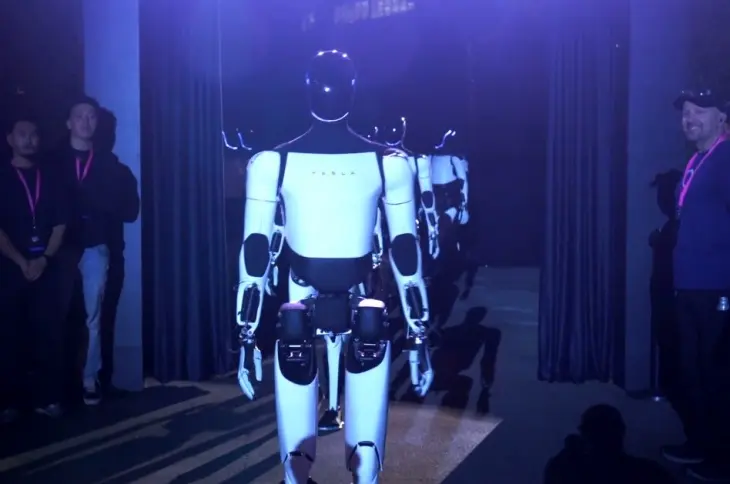
Elon Musk ushered in a new era in technology by unveiling Tesla’s long-awaited humanoid robot, Optimus TeslaBot , at an event he called “We, Robot.” TeslaBot surprised the audience by appearing on stage at the event, which also showcased Tesla’s autonomous vehicles like the Cybercab and Robovan. Musk explained that TeslaBot can be used for various tasks related to human life, claiming that these robots will revolutionize our daily routines . In this article, we’ve compiled everything you need to know about this potentially revolutionary innovation.
TeslaBot: The Humanoid Robot of the Future
TeslaBot was unveiled at the event as a humanoid robot, and videos showed it performing a range of human-serving tasks. These tasks included delivering packages, watering plants, and even childcare, demonstrating the robot’s breadth of capabilities. Musk stated that these robots could handle a wide range of tasks, from housework to walking pets.
TeslaBots performed at the event, mingling with the audience and putting on a lively show. These humanoid robots played rock-paper-scissors with people gathered around a table, handed out small gifts, and attracted attention with dancing. While these robots can currently perform simple tasks, Musk claims they will eventually take on much more complex functions.
TeslaBot Features and Price
Musk stated that TeslaBot will be priced between $20,000 and $30,000 in the long term. Musk stated that the robot could be used for both household and industrial applications, claiming that Optimus can do it all . This robot, which can be used for a variety of tasks, such as walking your dog, mowing your lawn, and even serving drinks, is seen as a technology that will completely transform home and business life in the future.
When TeslaBot was first unveiled in 2021, it wasn’t taken seriously enough, and it was ridiculed for an actor appearing on stage in a robot costume and dancing. However, a prototype unveiled in 2022, which walked onto the stage on its own, brought the project to a more serious level. Now, the robot has been released in a more advanced version, and it’s expected to begin performing useful tasks in the future .
The Future of TeslaBot
Musk claims that TeslaBot will revolutionize not only technology but also economic and societal aspects. According to Musk, these robots will double social productivity and enable a future without poverty . Furthermore, Musk states that millions of these robots will be produced and sold in high volumes. This demonstrates that Optimus is not just a luxury technology but a solution accessible to the masses.
Optimus made a huge splash at the We, Robot event where he performed. The idea of a humanoid robot that people can use in their daily lives is a significant sign of how technology will reshape our lives in the future. TeslaBot’s prospective economic and social impact could rekindle discussions about automation, particularly in the workforce.
TeslaBot Heads to Mars for Its New Mission
Elon Musk continues his space exploration efforts unabated with his company, SpaceX . Having previously planned numerous space missions to Mars and sent his own Tesla Roadster into orbit, Musk is now preparing the humanoid robot TeslaBot for a new space mission. TeslaBot, intended to make direct contact with Mars, is set to depart for Mars at the end of 2026. While the details of this space mission haven’t been fully disclosed, this news represents a significant step toward Elon Musk’s goal of colonizing Mars .