01.Security challenges in the construction industry
02.What are the “Information Security Guidelines for Construction Sites”?
03.What items of the “Information Security Guidelines for Construction Sites” can be addressed by LANSCOPE?
The construction industry, which has been said to be slower than other industries in adopting paperless systems, is gradually beginning to see progress in digital transformation (DX). However, due to reasons unique to the industry, many companies are not yet fully equipped with security measures suited to digitalization. The construction industry often plays an important role in protecting infrastructure, and requires particularly careful measures against incidents such as cyber attacks. In this article, we will explain the security measures that should be implemented using the “Information Security Guidelines for Construction Sites,” which were created for the construction industry.
Security challenges in the construction industry
The “2024 Problem” facing the construction industry
The construction industry is facing a challenge known as the “2024 Problem.” This refers to labor environment issues that the industry must address in order to comply with the Work Style Reform Act, which came into effect in April 2024. The Work Style Reform Act, which came into effect in 2019, provided a five-year grace period for capping overtime work in the construction industry. This was due to the fact that a variety of factors, including an aging workforce, labor shortages, and the normalization of long working hours, would make it difficult to immediately implement work style reforms. To comply with work style reforms, construction companies must actively engage in digitalization and the digital transformation (DX) that follows, improving operational efficiency and labor savings. Furthermore, when promoting digital transformation, it is essential to simultaneously advance cybersecurity preparations. However, enhancing security presents unique challenges in the industry.
Challenges unique to construction sites
Construction sites have unique conditions that differ from typical offices, and there are many constraints on implementing information security measures. The Japan Federation of Construction Contractors (JFCC) describes the constraints on information security measures at construction sites as follows:
① Because construction work products are produced individually and individually, various conditions such as use, structure, scale, and construction method vary, making it difficult to standardize work and rules that can be applied to all construction sites.
② Construction sites are designed with temporary specifications that are intended for use for a limited period of time, during the construction period, so simple IT equipment is used that can be flexibly changed or removed . (Equipment that is installed permanently in a permanent office is difficult to install permanently at a construction site.)
3) Because the cost of setting up and operating a site office is a site expense, there are significant limitations on the amount of money that can be invested . Furthermore, if the site office needs to be relocated or increased or decreased during the construction period, the physical, time, and financial constraints become even greater.
4) Construction sites are staffed not only by the main contractor, but also by many other parties , including the client, designers, subcontractors, and equipment manufacturers. In addition, the people involved change depending on the progress of the construction work, so there is a greater risk of information leaks than in a regular office, and it takes a lot of effort to instill information security education .
⑤In terms of the environment, it is difficult to ensure stable operation of information equipment due to the high level of dust and the use of temporary power sources . Drawings and documents are constantly being changed, so managing the originals and the latest versions is a significant burden .
Due to these factors, it can be said that thorough security at construction sites is a high hurdle. So, how should construction companies implement security measures?
What are the “Information Security Guidelines for Construction Sites”?
To properly recognize the unique environment surrounding construction sites and implement appropriate information security measures, it is effective to provide guidelines on setting information security standards and how to specifically achieve them. Against this background, the “Information Security Guidelines for Construction Sites” were created. The “Information Security Guidelines for Construction Sites” provide guidance on addressing security risks unique to the construction industry. The first edition was published in November 2008, revised in November 2020, and amended in February 2024. The “Information Security Guidelines for Construction Sites” are structured as follows: [1] Introduction: Introduction to the necessity and overview of the guidelines; [2] Procedures for establishing and operating an information security management system for construction sites; [3] Description of procedures for establishing and operating an information security management system ; Specific examples of what should be done to implement information security measures.
The structure is very simple, and the content is easy to understand for the target users, who are responsible for building information security systems at each company, and the site managers or implementation managers who are responsible for implementing information security measures at each construction site.
When actually using these guidelines, you will need to look at the specific examples listed in “(3) Implementation of information security measures” and respond accordingly.
3. Implementation of information security measures
3.1 Construction site office area classification and information security measures
3.2 Information Asset Management
3.3 Maintenance and management of information devices
3.3.1
Operation and management of information devices
3.3.2
Access Control
3.3.3
Antivirus
3.3.4
Installing the software
3.3.5
Log management
In particular, “3.3 Maintenance and Management of Information Devices” lists five basic items that should be implemented as security measures when using information devices such as PCs and smartphones for business purposes. It is especially recommended for company personnel who are promoting digitalization in the future to read through this.
Safety checks for other organizations
It is important that business partners and other organizations also use these guidelines and the guidelines described below to encourage them to strengthen their cybersecurity measures.
The 2024 revision added the following as a requirement for requesting strengthened information security measures from partner companies: “Toward Building Partnerships with Business Partners to Improve Cybersecurity Across the Supply Chain (Ministry of Economy, Trade and Industry, Japan Fair Trade Commission, October 28, 2022).” While stating that “depending on the method and content of the request, caution is required as it may be problematic as an abuse of a dominant bargaining position under the Antimonopoly Act,” it also states that “strengthening cybersecurity measures across the supply chain is an important initiative to prevent damage from cyberattacks from disrupting the supply chain and disrupting the stable supply of goods and services.” Compliance with the guidelines is an effective guideline for ensuring the security of business partners.
In addition to the “Information Security Guidelines for Construction Sites,” there are other guidelines that can be used as reference if you want to strengthen your cybersecurity measures.
(Reference) “Guidelines for Cyber-Physical Security Measures in Building Systems”
Smart buildings, where data sharing between devices and buildings is progressing, are becoming more common. As a result, the risk of building systems being subject to cyberattacks is increasing, and cybersecurity measures to prevent this are becoming increasingly important. However, due to the constraints of existing systems and cost issues, sufficient measures are often not being taken. The “Guidelines for Cyber-Physical Security Measures in Building Systems” published by the Ministry of Economy, Trade and Industry summarizes vulnerabilities, risks, security measures, etc. and provides guidelines for cybersecurity measures for all stakeholders involved in all types of buildings and building systems.
The “Cybersecurity Management Guidelines Ver. 3.0” published by the Information-Technology Promotion Agency (IPA), an independent administrative institution under the Ministry of Economy, Trade and Industry, is aimed at managers of large and small companies (excluding micro-businesses) regardless of industry. These guidelines emphasize the importance of management’s active involvement in cybersecurity measures and their integration into overall strategy. Specifically, they outline three fundamental principles: 1) incorporating cybersecurity into management strategy, 2) leadership by management, and 3) continuous improvement. Information security managers are also required to implement specific measures and improvements, including risk assessment, security policy development, incident response plans, education and training, and external partner management. Regardless of whether you’re in the construction industry or elsewhere, we recommend that you also refer to the “Cybersecurity Management Guidelines Ver. 3.0” if you want to strengthen your company’s overall security posture.
What items of the “Information Security Guidelines for Construction Sites” can be addressed by LANSCOPE?
From here, we will introduce how to specifically comply with the items outlined in the “Information Security Guidelines for Construction Sites,” using examples of items introduced in the guidelines.
<Items that can be handled by LANSCOPE Endpoint Manager Cloud Edition>
3.3.1 Operation and management of information devices
(3) Management of taking out information devices ■ Examples of measures : In case of theft or loss, etc., measures such as using password protected files or encrypting the files should be taken.
LANSCOPE Endpoint Manager Cloud Edition can locate lost devices using their location information, and can remotely lock or wipe them to prevent information leaks. It can obtain location information not only for Windows PCs, but also for iOS and Android smartphones.
3.3.1 Operation and management of information devices
(5) Management and operation of removable storage media ■Examples of measures : Only use media with security features such as password locks loaned by the company, and do not use personal media.
LANSCOPE Endpoint Manager Cloud Edition allows you to restrict the use of personal storage media by restricting the use of only specific storage media (such as USB memory sticks) provided by the company. In addition, you can set basic policies to prohibit, read-only, or allow on a group basis, so in addition to allowing only specific storage media, you can also flexibly set permissions for specific PCs, or temporarily allow only specific dates and times.
<Items that can be addressed with LANSCOPE Cyber Protection>
3.3.3 Antivirus measures
■Examples of countermeasures (some excerpts) ・Antivirus software (products that can be updated automatically) must be installed on computers and servers in field offices. ・Antivirus software must always use the latest pattern files and search engines .・Information security personnel must regularly check whether the pattern files on each computer have been updated.
If a computer connected to a network becomes infected with a virus, it could shut down the systems of not only the field office but also external parties and related companies. Virus infections could also lead to information leaks, which could result in a loss of trust in business partners and lead to liability issues.
LANSCOPE Cyber Protection is a next-generation antivirus tool that utilizes AI. It is capable of detecting unknown malware that is difficult to detect with conventional methods with an accuracy of 99% (*). Furthermore, since it does not use pattern files, daily updates are not required. Depending on the application, you can choose from two types of next-generation AI antivirus: “CylancePROTECT” and “Deep Instinct.” It detects threats such as malware with high accuracy and prevents infection before an attack occurs. (*EDR is available as an option for CylancePROTECT)
If you’re looking to visit Luxeuil-les-Bains for a weekend or a green getaway, you’ve come to the right place. This spa town in the Southern Vosges boasts an incredible heritage, pink sandstone facades, relaxing thermal baths, and charming streets. Visiting Luxeuil is a delightful blend of nature, history… and gastronomy!
What to do in Luxeuil-les-Bains? What are the must-see places not to be missed? Where to eat, what to see, and how to make the most of this still-too-little-known destination? Here, I’m sharing my 17 favorite places to visit Luxeuil-les-Bains, along with practical advice and some lovely surprises.
This article was created as part of a commercial collaboration with Luxeuil-les-Bains. As always, I retain 100% freedom in my editorial choices, and all the recommendations shared here are a sincere reflection of my experience there and valuable information gleaned from locals.
17 things to do when visiting Luxeuil-les-Bains
Explore the Heritage Trail
Visit the Ecclesia interpretation center , based on sacred archaeology
Climb to the top of the Aldermen’s Tower for a panoramic view
Take a nature break at the edge of the Planey spring
Explore the Route des Chalots: an itinerary between nature and local artisans
Relax at the Luxeuil thermal baths (wellness spa & treatments)
Visit the Devoille artisanal distillery and discover how Kirsch is made
Enjoy a peaceful moment in the Green Fairy Garden (ideal for a picnic)
Attend the “Venice in Luxeuil” night parade (April event)
Take a guided tour of the Luxeuil ham drying room
Go for a hike on the Cherry Country circuit
Take your discovery to the Fougerolles eco-museum
Admire St. Peter’s Basilica
Pass under the arches of the cloister of the Abbey of Saint-Colomban
Fill up on nature between forest and lake
Visit the La Rochère glassworks: the oldest glassworks in France
Discover Luxeuil lace: exceptional expertise
Good addresses in Luxeuil-les-Bains
Where to eat? Restaurants and gourmet addresses in Luxeuil
Where to sleep in Luxeuil-les-Bains?
Where to buy local products or souvenirs?
Google map / map of the visit of Luxeuil-les-Bains
Before leaving for the visit of Luxeuil-les-Bains
A small spa town in Franche-Comté, Luxeuil-les-Bains has everything a large town has to offer… without the hustle and bustle! Indeed, it’s the perfect destination for a weekend spent exploring slow tourism, combining historic heritage, wellness breaks, and nature walks. People come here to breathe, stroll, and explore. Finally, they often leave wanting more.
How to get to Luxeuil-les-Bains?
The city is located in Haute-Saône , on the border between Bourgogne-Franche-Comté and Grand Est.
By train : Luxeuil is accessible by TER from Belfort, Vesoul or Épinal , with possible connections from Paris (via Vesoul or Lure). By TGV from Marseille, I was able to reach Vesoul (in 4h30) and rent a vehicle for the weekend.
By car : It’s an hour from Besançon, 45 minutes from Épinal or Belfort, and 2.5 hours from Strasbourg or Lyon. There are several free parking lots in the center.
When is the best time to visit Luxeuil-les-Bains?
It all depends on what you are looking for:
Spring → flowery atmosphere, mild temperatures, events like the “Venice in Luxeuil” parade
Summer → cultural events, bike or horse rides, aperitifs on the terrace
Autumn → hiking + golden colors, wellness spa
Winter → the thermal baths are closed in winter, it is better to choose another season to fully enjoy Luxeuil
How to get around when you visit Luxeuil-les-Bains?
Luxeuil is a town on a human scale , perfect for exploring on foot . The historic center, the thermal baths, the gardens and the main museums are all close to each other. To explore the surrounding area (ecomuseum, distillery, hiking), a car is recommended.
Visiting Luxeuil-les-Bains: for what type of traveler?
Luxeuil-les-Bains is typically the kind of place I would happily recommend to those who like to get off the beaten track. Indeed, this charming town will appeal to all lovers of towns steeped in history, peaceful strolls, and well-chosen local addresses.
What’s more, here, there’s no need to rush from one monument to another: slow tourism takes on its full meaning, between heritage, thermal baths, forests, and little gems to discover at your own pace. It’s also a perfect destination if you like crafts , local know-how, and regional gastronomy —there’s plenty to eat well and leave with some specialties under your arm, like ham and potted sour cherries!
Explore the Luxeuil-les-Bains Heritage Trail
A stroll to go back in time… at your own pace
To begin with, if there is one ideal way to discover Luxeuil-les-Bains gently, it is to let yourself be guided along the Heritage Trail , a marked walking trail that immerses you in more than 2,000 years of history. Then, over the course of 14 stages, you will cross the most beautiful corners of the city : Saint-Pierre Basilica, majestic cloister, Renaissance facades, Belle Époque villas, ancient thermal baths… Moreover, some of these monuments are even part of the 17 sites classified as Historic Monuments.
The little detail that makes all the difference? To follow the route, simply look for the bronze suns nailed to the ground: they point you in the right direction at each stage. In addition, each stop is an opportunity to learn a little more about the past of this spa and heritage town .
Three ways to follow the heritage trail:
With your smartphone : The trail is punctuated by terminals equipped with QR codes . Scan, plug in your headphones, and let yourself be told the secrets of the city. No need to book, everything is at your fingertips!
With a classic audio guide : If you prefer the traditional experience, you can rent an audio guide from the Tourist Office for €2 per person.
With the paper map : For fans of old-school discovery, the Heritage Trail map is available free of charge at the Tourist Office . It’s up to you to play by following the map and the markers on the ground!
Visit the Ecclesia, the archaeological interpretation center of Luxeuil-les-Bains
A unique place to immerse yourself in 2,000 years of sacred history
If you love cities steeped in history, you’ll love the Ecclesia. This archaeological interpretation center, nestled among the city’s major monuments, is a real surprise! Here you’ll discover the remains of the ancient Saint-Martin church, unearthed during impressive excavations carried out between 2005 and 2015. Originally, there was just a simple parking lot… but beneath the asphalt lay a major archaeological treasure, one of the largest Merovingian sites in Europe !
The modern building was constructed around the ruins, like a vast window into the past. More than 150 sarcophagi, the crypt of Saint Valbert, and remarkably preserved Gallo-Roman archaeological remains bear witness to the religious importance of Luxeuil-les-Bains over the centuries.
Inside, the visit is immersive, with lighting effects, videos, and display cases highlighting the tombs, liturgical objects, and discoveries made on site. It’s easy to see why Luxeuil was an influential religious center, particularly thanks to the abbey founded by Saint Columbanus in the 6th century.
It is a place not to be missed and as it is right in the city center, it is also an excellent idea to visit if it rains in Luxeuil or in case of strong hea
Climb to the top of the Aldermen’s Tower for a breathtaking view of Luxeuil
An emblematic monument… and a beautiful view to boot
It’s impossible to visit Luxeuil-les-Bains without looking up at the Aldermen’s Tower : this slender silhouette of pink sandstone has proudly dominated the historic center since the 15th century. It’s one of the city’s most iconic buildings, both elegant and steeped in history.
Inside, the tour takes you to a small museum of art and local history. But the main attraction is clearly the climb to the top with its 146 steps. Once at the top, the panoramic view of the red roofs of Luxeuil, the basilica, the thermal park, and the Vosges mountains in the distance is breathtaking. The climb is not particularly difficult (there is a spiral staircase, but it’s accessible), and frankly, the reward is well worth the effort.
It’s also a great spot to take some great photos — or just take a quiet moment above the city.
Walk to the source of the Planey: discovery of a mysterious chasm with turquoise waters
Fancy a little green getaway, with a hint of geological mystery?
When you visit Luxeuil-les-Bains, put on your shoes and set off to discover the Planey spring , a turquoise-colored spring hidden not far from Luxeuil-les-Bains. The walk here is as beautiful as the destination: an easy path that runs alongside a discreet stream, winds beneath the trees, and leads you straight to this fascinating chasm , where water gushes from the limestone subsoil.
The atmosphere is peaceful, lulled by birdsong and the gentle murmur of the water. It smells of the Vosges forest, and on sunny days, it’s the perfect spot for a cool break or a small picnic in the shade.
But what awaits you at the end of the path is something magical: a pool of turquoise blue water, which sparkles depending on the light. This Vaucluse resurgence plunges to a depth of 32 meters , connected to a complex underground karst network. Galleries, siphons and cavities create an invisible world beneath your feet.
Behind this beauty, however, lies an extremely dangerous abyss: clay particles quickly make the water cloudy at the slightest disturbance, and underwater exploration is strictly reserved for authorized professional divers.
Important :
Swimming prohibited.
Regulated underwater exploration on request only.
Simply take the time to admire the spring in complete safety, enjoying this corner of preserved nature , just a stone’s throw from the town. A zen interlude that perfectly completes the discovery of Luxeuil. You will find the topo at the Luxeuil Tourist Office in Hiking Sheet #12.
Travel the Chalots road
A nature and local itinerary between Vosges and Haute-Saône
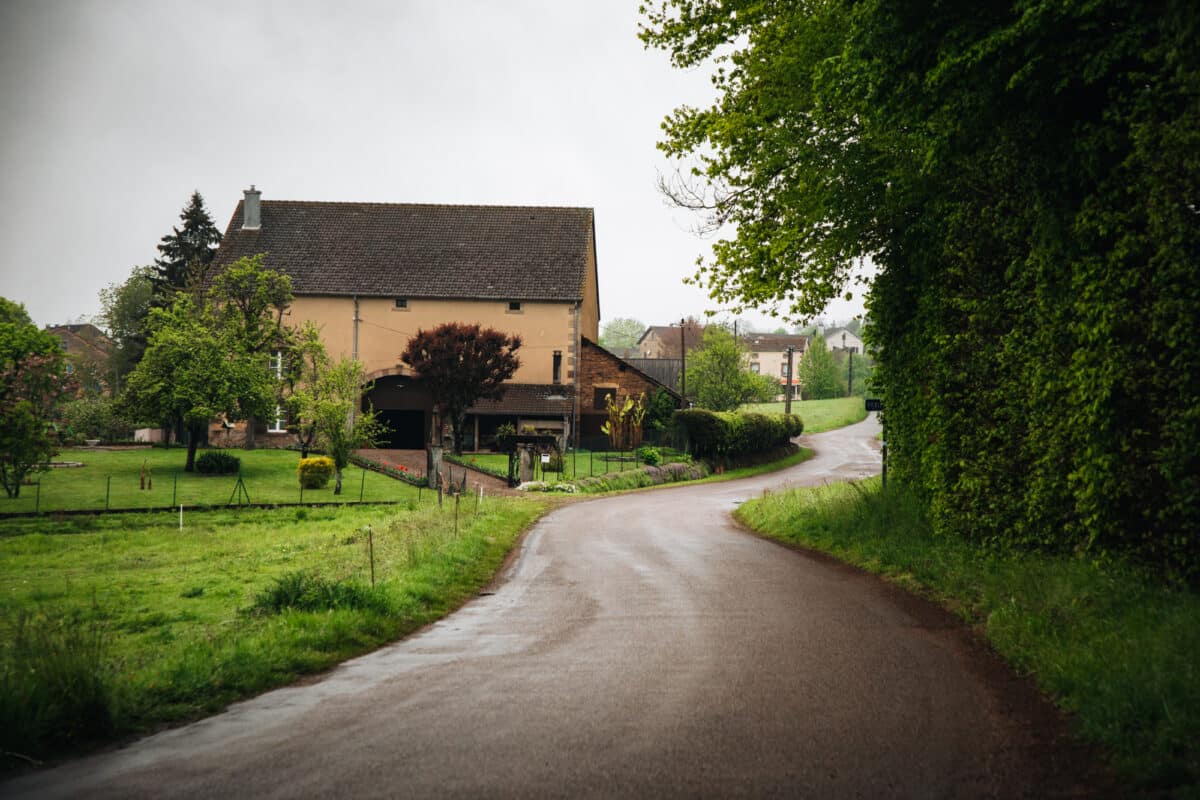
Ready for a little country road trip between Vosges and Haute-Saône? The Route des Chalots is the perfect route to get some fresh air, enjoy the scenery, and meet local artisans.
But first, what is a chalot? This small, removable wooden granary, located next to farms, was once used to store precious crops away from fire (in case of a fire in the house or farm buildings). A piece of rural heritage unique to this region! You’ll come across several of them along the route.
Along 120 km of marked trails, you can explore at your own pace, whether by car, bike or even on horseback. Along the way, you’ll meet producers, artisans, chocolatiers, brewers , as well as gardens, accommodation providers and restaurants: a whole network of 29 partners who open their doors to share their expertise and specialties . Enough to create your own authentic gourmet itinerary .
Recommended departure from the Cherry Country Ecomuseum in Fougerolles, for a heritage taster before hitting the road.
Relax at the Thermes de Luxeuil-les-Bains: spa, treatments & the good life
A moment of well-being in the heart of a historic setting
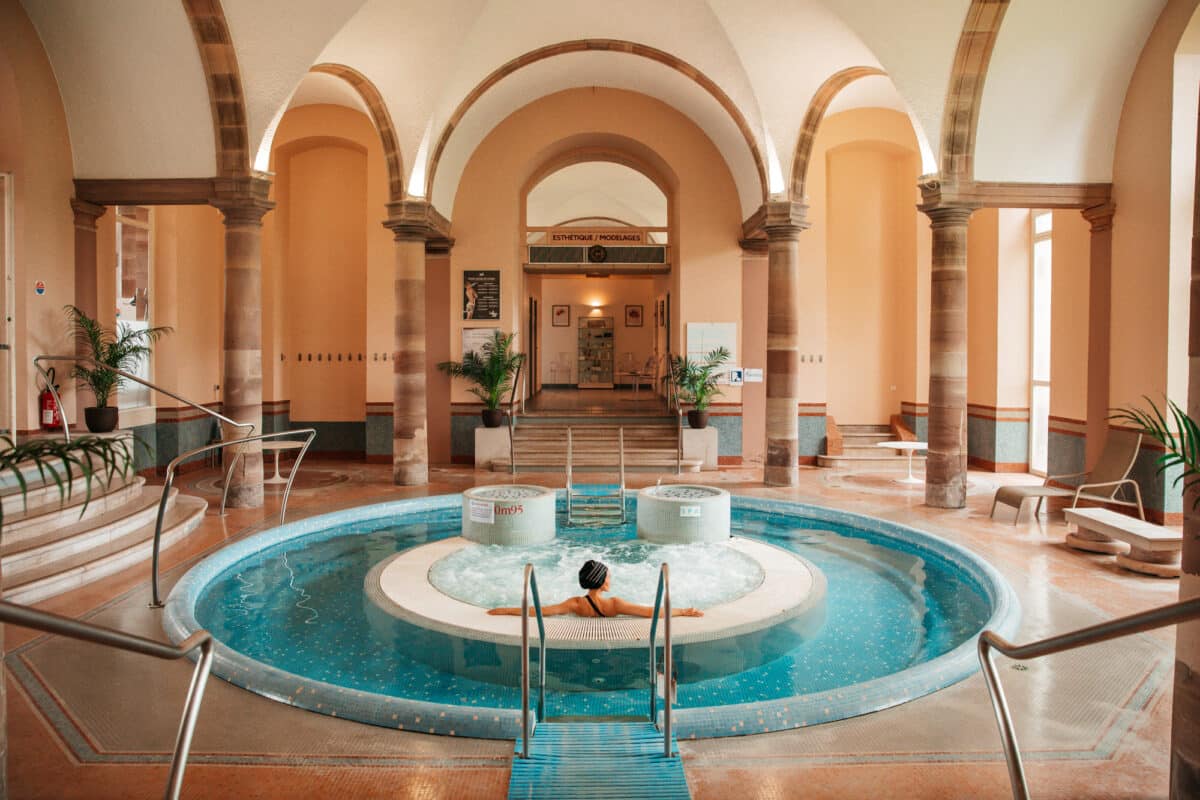
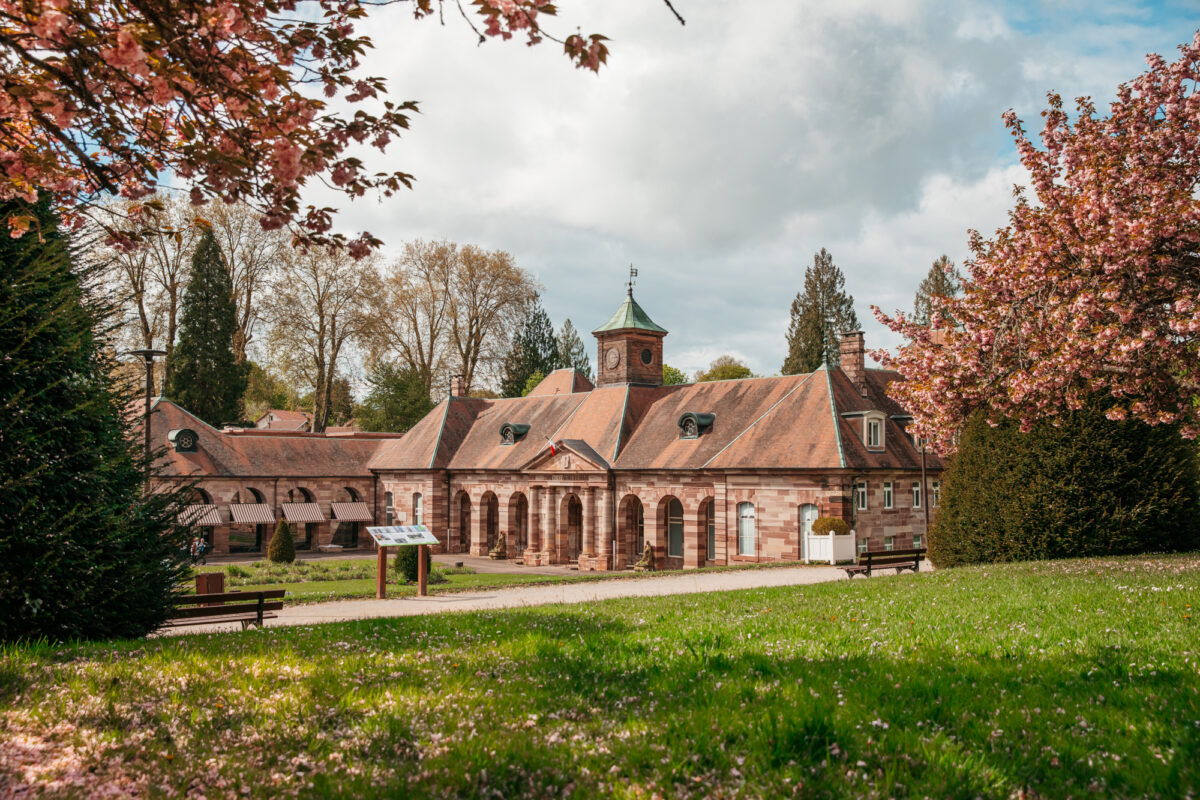
First of all, it’s impossible to visit Luxeuil-les-Bains without stopping by its iconic thermal baths , which have made the town famous. Housed in a superb Belle Époque building, the thermal spa combines elegant architecture with a cozy atmosphere. As soon as you step through the door, everything slows down. Indeed, the watchword here is: take care of yourself.
The fitness and wellness area offers a contemporary thermal pool , bathed in light and opening onto the park, animated by whirlpools, underwater jets, carp showers and counter-current swimming. You will also find a whirlpool bath at 34°C and a hammam at 45°C, perfect for releasing tension.
To extend the experience, book à la carte treatments at the “Au Bain des Fleurs” Beauty Institute: massages with essential oils, facial and body treatments, remineralizing bath or application of clay as a hot cushion.
And if you want to go further, know that the Thermes de Luxeuil-les-Bains also offer thermal cures , recognized for their benefits in phlebology, gynecology and rheumatology. A great way to combine health care and moments of relaxation in the same place.
Visit the Devoille artisanal distillery: absinthe, kirsch and local know-how
A dive into the aromas of yesteryear… and some surprising discoveries
Among the visits I enjoyed the most in Luxeuil and the surrounding area was the Devoille artisanal distillery in Fougerolles-Saint-Valbert . It is a charming place. Housed in an old building, you can discover all the secrets of making traditional alcohols from the cherry region : kirsch, eaux-de-vie, liqueurs… and above all, the famous absinthe .
The tour is partly self-guided, and the rest is a free guided tour depending on availability in the shop. You’ll see the copper stills, the maceration rooms, and the stuffed demijohns that ferment the alcohol. The smell in the air alone is worth the detour!
Thus, the tasting at the end of the tour allows you to discover typical products, sometimes surprising (there is even an alcohol-free absinthe), always made on site with fruits from the region.
A true pleasure for the senses , not to be missed if you enjoy artisanal know-how and unusual tasting tours . Of course, alcohol abuse is dangerous for your health, consume in moderation.
What to do in Luxeuil for a picnic?
A little corner of nature to relax between two visits
First of all, if you’re looking for a real green break, the Jardin de la Fée Verte is an excellent option. Next, located next to the Devoille distillery in Fougerolles, this discreet garden offers the perfect setting for enjoying a picnic between visits. Indeed, it’s one of those quiet and private places that deserves to be added to your itinerary.
In addition, there are benches, picnic tables , squares of aromatic plants and flowerbeds. But above all, the atmosphere is peaceful, almost confidential. Moreover, if you are lucky, you might see some birds or butterflies coming to pollinate the flowers. In short, it is a true nature interlude near Luxeuil-les-Bains. And finally, you will have the opportunity to see a chalot and its interior.
To create a local and gourmet picnic, consider a detour to the Les Délices de Charlottine boutique in Fougerolles. You will find a beautiful selection of sweet and savory artisanal products: homemade jams, traditional biscuits, fruit syrups, but above all regional cheeses and fine charcuterie . Everything is offered in pretty discovery boxes ready to take away , perfect for savoring the Franche-Comté region on a bench in the sun or in a green corner like the Jardin de la Fée Verte.
Attend the “Venice in Luxeuil” night parade: a magical evening in the heart of the city
Visit Luxeuil-les-Bains in Venetian carnival style
Every spring, Luxeuil-les-Bains transforms into a little Venice of Franche-Comté for one evening . It’s the most magical event of the year: the nighttime parade “Venice in Luxeuil” attracts dozens of costumed characters from all over France and even Italy, to parade through the streets of the town center in a magical atmosphere.
Embroidered costumes, enigmatic masks, subdued lighting, soft music… The atmosphere is truly timeless. Saint Peter’s Square , the surroundings of the basilica and the pink sandstone alleys serve as a backdrop for this poetic parade, between dance, slowness and mystery. It is a unique experience to live if you are passing through Luxeuil at this time.
The event is free and well-attended, so it’s best to arrive early to park and secure a good spot. For photography enthusiasts (or simply fans of beautiful atmospheres), it’s a visual gem.
Discover the Luxeuil ham dryer: tradition and local produce on your plate
Very local know-how… and very tasty
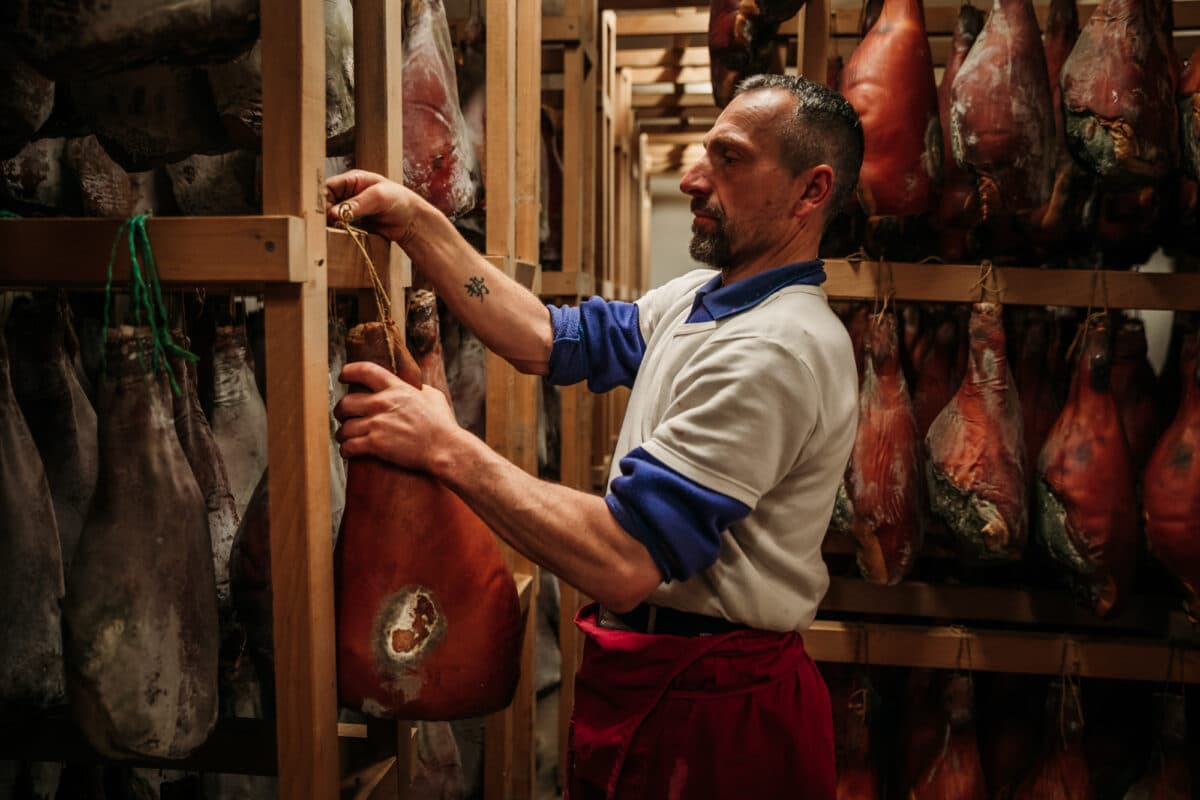
When it comes to local specialties in Luxeuil-les-Bains, Luxeuil ham undoubtedly tops the list. Smoked over softwood and slowly cured under very specific conditions, this PGI ham has a real personality—and, above all, a story to tell. So, if you’d like to learn more (and taste it, of course), there’s nothing like a guided tour of the ham drying room , offered by artisan butcher Daval, a passionate local producer.
Throughout the tour, you will discover the different stages of production: salting, smoking, curing, etc. In addition, an immersion in the traditional drying room allows you to observe hams hanging in the traditional way, in a delicious smell of wood and spices. Finally, the tour ends with a tasting, and it is very difficult to leave empty-handed…
It’s both a gourmet and educational experience, perfect for lovers of regional gastronomy and those who like to see what they put on their plate
Hike around the Cherry Country Ecomuseum: nature, orchards and local heritage
Visit Luxeuil Southern Vosges: a loop through the heart of the orchards and traditions of Franche-Comté
If you have a little time on your hands and want to get moving, I recommend the Cherry Country Ecomuseum trail . This marked trail, accessible from Fougerolles-Saint-Valbert , takes you through the typical landscapes of Burgundy Franche-Comté: orchards, meadows, small hamlets, and forests. It’s a great opportunity to get some fresh air while discovering the agricultural and artisanal traditions linked to the cultivation of cherries, absinthe, and kirsch.
The trail loops around the ecomuseum, which I recommend visiting before or after the walk to better understand this unique area. Along the way, you’ll come across explanatory panels, old fruit dryers, and even cherry huts!
And if you happen to be there at the right time, when the trees are laden with red berries, the museum invites visitors to pick a few cherries from their plots themselves and take home their own delicious treasure. A lovely way to combine discovery and indulgence in the great outdoors.
This is a perfect hike to immerse yourself in the local countryside and slow down the pace a little, while varying the pleasures between heritage, nature and know-how . You will find the topo at the Luxeuil Tourist Office in Hiking Sheet #2.
Discover the Cherry Country Ecomuseum: Immersion in traditions in Fougerolles
A living museum in the heart of the cherry trees
Just a stone’s throw from the Devoille distillery, another must-see visit awaits you: the Cherry Country Ecomuseum in Fougerolles-Saint-Valbert . This open-air venue passionately retraces the history of cherries in the region—but not only that. Here, you’ll discover a whole section of rural life in Franche-Comté , including agriculture, distillation, family traditions, and typical architecture.
The site is organized around a beautiful 18th-century half-timbered house, accompanied by a conservatory garden , an orchard, temporary exhibitions and an impressive collection of antique objects. The scenography, meanwhile, is neat, lively, and sometimes even a bit offbeat. In short, it’s the kind of museum where you can learn without ever getting bored.
If you like authentic visits , with a real anchorage in the territory, this is a perfect stop to integrate into your day in the surroundings of Luxeuil. Bonus: the shop offers local cherry-based products. Just like leaving with a little local souvenir! Otherwise, you can also buy griottes (pitted, semi-candied morello cherries in a jar) or cherry kirsch.
Visit St. Peter’s Basilica: an architectural gem in pink sandstone
A majestic monument, the spiritual heart of Luxeuil-les-Bains
Strolling through the historic center, it’s hard to miss Saint Peter’s Basilica : its imposing silhouette, all in pink Vosges sandstone , naturally catches the eye. This emblematic monument of Luxeuil-les-Bains combines several architectural styles—Romanesque, Gothic, and Classical—that bear witness to the city’s centuries of history.
Furthermore, among the treasures not to be missed, it is impossible to ignore the monumental organ located almost above the entrance. Built in 1617 and then enlarged in 1685, this instrument is among the oldest in Franche-Comté still in place. As a bonus, the 17th-century oak organ case is a remarkable work in itself, with its powerful atalantes and symbolic medallions.
Not far from there, the pulpit also intrigues with its imposing dimensions. First installed at Notre-Dame Cathedral in Paris, it was removed there and then moved to Luxeuil, where its size stands out slightly in the more intimate space of the basilica. A detail that further reinforces the exceptional and unexpected character of this liturgical furniture.
Stroll through the cloister of the former Saint-Colomban abbey: silence and history
A peaceful place full of memories
Right next to the entrance to the basilica, at the bottom of the covered stairs, hides one of my favorite spots in Luxeuil-les-Bains: the cloister of the former Saint-Colomban abbey . Indeed, it is a place that is both sober and deeply soothing. Thus, in just a few steps, you leave the bustling heart of the city and immerse yourself in a silent, almost meditative atmosphere.
The cloister galleries, made of pink sandstone , form a square around a small central garden. The columns are elegant, the lighting changes with the hours, and the place really invites you to slow down. Under these arches, it is easy to imagine the soft footsteps of the monks, the murmured prayers… and the entire monastic history of Luxeuil, which shone throughout Europe thanks to Saint Columban.
It’s a short but valuable visit and the site is free to access.
+ What to see during your visit to the Saint-Colomban cloister
Walk to the Seven Horses Lake and in the Banney Forest
Nature getaway around Luxeuil: between forest, pond and local legend
Want to breathe deeply? Head to the Lac des 7 Chevaux and the Banney national forest , two perfect natural spots to escape… without actually leaving Luxeuil-les-Bains.
Surrounded by forest, Lake 7 Horses is the perfect place for a quiet walk or a meditative break by the water. The trail that runs around it is easy to access and particularly pleasant at the end of the day.
North of Luxeuil, the Banney forest opens its trails to you. This former abbot’s domain is today a vast forest area of more than 2,000 hectares , crossed by marked trails for walkers, cyclists and horse riders. Along the way, you sometimes come across Celtic fountains , mysterious vestiges of another time.
The forest is also an ideal place for families : a large playground has been set up for children, with structures for letting off steam and areas for picnics. But the real surprise is the two animal enclosures where you can observe wild boars (descendants of a couple from the Jura) and curious sika deer, a species from the Far East. These animals are easy to approach… but be careful, you don’t feed them, even if they make eyes at you!
What to do in Luxeuil? See the oldest glassworks in France still in operation.
Want to discover a jewel of local craftsmanship not far from Luxeuil-les-Bains?
Head to La Rochère , an artisanal glassworks founded in 1475 , which holds the title of the oldest glassworks in France still in operation . For more than five centuries, it has perpetuated ancestral glassmaking know-how , while offering modern creations that illustrate its dynamism.
Here, the spectacle is permanent: you can observe the master glassmakers at work , handling the cane and the molten glass around the furnaces. Indeed, it is always fascinating to see how a simple glass bubble is transformed, in a few precise gestures, into a glass, vase or carafe.
But La Rochère also has an unexpected Japanese garden, hidden behind industrial buildings, and a factory outlet where you can leave with beautiful pieces at low prices – perfect if you want to bring back a useful and refined souvenir.
A true jewel of Haute-Saône heritage, labeled a Living Heritage Company: it’s worth the visit!
Discover Luxeuil lace: exceptional expertise
A delicate craft with a centuries-old history
Since the 17th century, Luxeuil-les-Bains has perpetuated a rare and precious craft: needle lace. This delicate skill, passed down from generation to generation, is still very much alive today, thanks in particular to the Lace Conservatory housed in the former cloister of the Saint-Colomban Abbey.
You can admire magnificent handcrafted pieces, attend demonstrations, or learn about this unique technique through workshops. It’s a poetic immersion into an almost extinct art, and a wonderful opportunity to support a living heritage.
Where to eat in Luxeuil-les-Bains? My favorite places
The Golden Apple
A Luxeuil institution! Nestled in a beautiful downtown building, La Pomme d’Or offers generous cuisine. The dishes are elegant without being stuffy, and the service is attentive. People come here to celebrate a special occasion or to treat themselves to a good, no-nonsense meal.
My advice: let yourself be tempted by the chef’s suggestions. The cooking is masterful, a delight!
The French Café Annex
A delightful culinary surprise in Luxeuil-les-Bains. L’Annexe du Café Français offers refined, gourmet, and resolutely homemade cuisine in a warm and contemporary setting. Here, everything is done to showcase seasonal produce, with generous and elegant plates.
The venue is ideal for lunch with friends or dinner for two, with attentive service. The menu is short, well thought out, and regularly updated.
My advice: An address that combines creativity, freshness and conviviality, perfect for a romantic dinner in Luxeuil.
Luxovian Brasserie
A simple and friendly place, perfect for a quick bite to eat or a drink right next to Place de la République. Brasserie Luxovienne offers salads, cheese tartines, regional specialty platters, and of course, beers brewed on-site.
My recommendation: try it at lunchtime for a quick break between two visits. The value for money is excellent, and the welcome is very friendly.
Restaurant Gérôme and Vincent – Saint-Loup-sur-Semouse
Located 15 minutes from Luxeuil, this family-run restaurant is definitely worth a visit. The dining room is cozy, the atmosphere warm, and the cuisine showcases seasonal produce with true sensitivity. The restaurant is well-known among locals and is often full—a good sign.
My advice: book in advance, especially on weekends! The daily menu is a great way to sample several of the chef’s creations.
Beau Site Hotel Restaurant
Housed in a magnificent building facing a large wooded park, the Beau Site restaurant offers gourmet cuisine in an elegant and bright setting. The dishes are refined and flavorful, and local produce is often featured prominently. A true culinary experience without a false note.
My advice: This is the perfect place to celebrate an occasion or have a chic lunch. And if you’re staying at the hotel, remember to book your table in advance.
Where to stay in Luxeuil-les-Bains? Beautiful accommodations
Hotel Le Métropole – Simple elegance and central location
Housed in an elegant Belle Époque building, just across the street from the thermal baths and thermal park, Hôtel Le Métropole is the perfect place for a comfortable stay in the heart of Luxeuil-les-Bains. The ambiance is classic and warm, with large, bright rooms, some with kitchenettes for greater independence.
The establishment features a lovely tree-lined garden and a pleasant terrace facing the thermal baths and their garden. It offers direct access to the thermal center and the casino, making it an ideal option for wellness stays and spa treatments.
Why I recommend it: For its ultra-central location and spacious rooms, the Hôtel Le Métropole is an excellent choice for a relaxing weekend just across the street from the thermal baths.
Hôtel Beau Site – Charm, well-being & tradition
Located in the heart of Luxeuil-les-Bains, opposite the thermal baths and casino, the Hôtel Beau Site is an iconic address that combines elegance, comfort, and family tradition for four generations. The establishment offers 39 personalized rooms, nestled in a one-hectare wooded park, offering a peaceful and green setting.
Wellness facilities include a heated outdoor pool, an 80 m² spa with a jacuzzi, sauna, massage room, and fitness room, perfect for a relaxing getaway. The on-site restaurant is the one I recommend earlier in this article.
The hotel’s strengths: For a complete experience combining relaxation, gastronomy and charm, the Hôtel Beau Site is a sure bet in Luxeuil-les-Bains.
Le Clos Rebillotte – charm & comfort
Located right next to the casino, Le Clos Rebillotte is an elegant and peaceful hotel, perfect for a relaxing getaway. The rooms are spacious and well-equipped, and some overlook the thermal park.
Why this hotel: excellent value for money, in a simple and relaxing setting, a stone’s throw from the thermal baths.
Where to find souvenirs in Luxeuil-les-Bains?
If, like me, you like to bring back a little piece of each destination in your suitcase , then you will love strolling through the shops of Luxeuil. Between local crafts , handmade creations and local products , there is something to please (or treat yourself) without falling into soulless souvenirs.
Here are some favorite places to find unique, delicious or inspiring items to slip into your bag before you leave.
Tourist Office Shop : Located in the heart of the town center, the Tourist Office shop offers a wide range of local and artisanal products: jewelry from La Rochère, textiles, tote bags, local specialties, postcards, books, wellness products, delicatessen, and souvenirs related to Air Base 116. A must-see for authentic gifts
Aux Pépites – Designer Workshop and Boutique : This boutique is filled with creations from local artisans and those from all over France. Here you’ll find original, handmade gift ideas: jewelry, accessories, decorative items, and much more. A veritable treasure trove for craft lovers.
La Chocolaterie : For those with a sweet tooth, La Chocolaterie offers a selection of artisanal chocolates and confectionery. A sweet treat to treat yourself or others.
Epicerie des Arcades : This delicatessen offers a selection of exceptional products: wines, spirits, terrines, jams, and other regional specialties including the famous morello cherries. Perfect for creating a gourmet gift basket.
Need a hand visualizing all this?
You can find all of these ideas for visits, restaurants, and favorite places directly on my interactive map below. It’s a great way to easily find everything and organize your itinerary in the blink of an eye!
Spacecraft social networks not only bring science closer to people, but also change the ways of communication in science. A striking example is the tweets of NASA’s Mars rovers
These days, most space enthusiasts follow their favorite missions on social media. An important milestone in the development of such communication were the Twitter accounts of Mars rovers, which were among the first to conquer the Internet back in the 2000s. RBC Trends explains what role spacecraft accounts play in the evolution of scientific communication and how they change attitudes toward science.
What are Mars Rover Twitters?
Rover Twitters are the official Twitter accounts (now X) operated by NASA on behalf of Mars rovers such as Curiosity and Perseverance, and previously Spirit and Opportunity. These accounts post first-person accounts about the adventures of the rovers on Mars.
The format began to develop in 2008, when NASA launched the account @MarsPhoenix — the first “talking” rover. It posted first-person updates during its mission at the North Pole of Mars. @MarsPhoenix soon became the fifth most popular account on the entire social network, with more than 38,000 subscribers.
In 2009, the @MarsRovers (@SpiritandOppy) account appeared, uniting the missions of the Spirit and Opportunity rovers. Their tweets humorously described the working days of the devices and tragically told about the end of the missions. The most popular Twitter account among readers was @MarsCuriosity, which was created in 2012. It gave birth to many memes thanks to the rover’s humorous posts and selfies, and over the years of its existence, it has gained more than 4 million subscribers.
In 2020, @NASAPersevere was added to the account, describing the rover’s epic landing and the work of the first Martian helicopter.
What do you remember about them?
Posts on the rovers’ accounts have repeatedly evoked a wide response from the audience and even become “cultural phenomena.”
Opportunity’s Last Words
In 2019, the Opportunity rover tweeted, “My battery is low and it’s getting dark.” The rover was saying goodbye to the public after operating for 15 years instead of the planned 90 days. The message caused a huge emotional response , with users comparing it to the last words of a lone explorer before his death. After that, the hashtag @GoodNightOppy quickly gained popularity on Twitter, and in 2022, a documentary of the same name, Goodnight Oppy, was released , in which the rover appears similar to the Pixar cartoon character Wall-E .
Successful landing and first steps of Perseverance
In 2021, the Perseverance rover announced its successful landing on Mars to the world: “Hello, world. My first look at my forever home. #CountdownToMars.” In addition to the poetry of the tweet, users noticed the use of “Hello, world,” the first phrase that novice programmers learn to write using code. In addition, the message was accompanied by photos of Mars. The tweet collected more than 800 thousand likes and hundreds of thousands of reposts.
A little later, Perseverance delighted followers with its first steps: “I’m moving! Just took my first test drive on Mars, and checking out my new wheels. So far, so good.” The animation of the tire tracks delighted viewers as the rover officially began its journey on Mars.
In the summer of 2025, Perseverance sent back new images. The NASA team took advantage of clear weather on the Red Planet to take one of the clearest panoramas in the history of the mission. The image consists of 96 images taken from the same location but at different angles. The photo shows rocks, the boundary between two geological formations, and hills located up to 40 miles (65 km) apart. In the processed version, the Martian sky looks surprisingly clear and deceptively blue, while in the natural-color version it is reddish.
Perseverance also discovered a curious rock on the surface of Mars, shaped like a volcano or a battle helmet. Its surface is covered with irregularities and inclusions, which makes it look like ancient armor. There is a theory that such formations could have formed on Mars when groundwater passed through porous sedimentary rocks.
Curiosity jokes
In 2013, the Curiosity spacecraft made its subscribers laugh by singing the song Happy Birthday to itself: “Happy birthday to me… Wait, how do I know it’s my birthday? Earth told me. I don’t have a cake, but here’s a selfie!”
In this way, Curiosity “celebrated” the anniversary of its mission, and the device’s self-portrait became a meme. After that, the rover began to regularly publish auto-congratulations, and fans joined them.
Already in 2022, the device pulled off another funny trick, finding a “doorway”: “Sure, it looks like a tiny door. But really, it’s a natural rock formation. Still… anyone home?” The photo of the strange gap in the rock gave rise to theories and memes about “ Martian doors ,” and NASA had to explain that it was just the result of erosion.
Spirit Incidents
Another rover, Spirit, also liked to turn serious situations into funny ones. In 2009, when the rover got stuck in sand, it wrote, “I’m not stuck. I’m just… conducting long-term traction research. Yeah. That’s the story.” In reality, things were so bad that Spirit had to end its mission.
What are Mars rovers’ twitter feeds for?
The American space agency came up with the idea of Mars rover Twitters for a reason: it is a strategy that combines popularization of science with storytelling and social media trends. Rovers gain followers on social media, including celebrities, and the rovers themselves use popular online phrases to be closer to the audience. In addition, social media provides an opportunity for feedback, bringing science closer to the general public.
The characters from the children’s show “Sesame Street” ask NASA to send them to the moon (Photo: x.com)
NASA employees acknowledged that their main goal is to keep people interested in missions that can last months, if not years. They noted that they carefully worked on the personality and character of each rover. For example, in the case of Perseverance, specialists decided to think through the rover’s “hobbies” in advance: photography, collecting rocks, and off-road driving.
NASA highlights several key aspects of this trend:
popularizing science through stories “about the complex in simple terms” – Mars rovers’ Twitter feeds provide fascinating insights into missions, discoveries, and technologies;
Direct communication with the audience – people can follow the research of the devices in real time, like a reality show, and also ask questions and write comments, knowing that they will receive feedback;
wide reach – popular posts on social networks can gain millions of views, and the audience of accounts expands due to reposts, while specialized resources are visited only by researchers or space enthusiasts;
appeal to emotions – social media can be used to publish posts that will touch the audience’s feelings, such as memes or the “last words” of devices.
Such strategies turn rovers into “bloggers” from another planet, bringing science closer to people and attracting new audiences, the space agency explains . NASA’s approach to running its rovers’ Twitter feeds has won awards on multiple occasions . In 2012, @MarsCuriosity won the Shorty Award for best government use of social media. @MarsPhoenix also won the same award in 2009.
There are already several studies that confirm that such an approach not only popularizes science through anthropomorphization (humanization) of spacecraft, but also changes the way people perceive technology – through emotions and humor. Thus, Opportunity’s tweet about “death” gained many times more reposts than regular news about the completion of the mission. Researchers come to the conclusion that social networks have changed science and scientific communication.
They also note that anthropomorphized communication makes it easier to understand complex concepts, and people are more likely to remember information presented through stories with characters. Some authors have even suggested including NASA tweets in educational materials for children and adolescents to increase their engagement in the learning process.
However, some researchers emphasize that anthropomorphism in science has its pitfalls: people begin to attribute consciousness to inanimate objects and can overreact to negative events. They also found that users often had difficulty recognizing when tweets were about robots rather than people. In the case of Opportunity , users mistakenly perceived the news about the “death” of the rover as a message about the death of a person in 63% of cases. Supporters of this point of view do not reject the approach as such, but advocate for the conscious use of anthropomorphism.
ChatGPT and Grok are quickly becoming the new go-to tool for traders. They not only provide quick context, but also help capture sentiment, strategic hooks, and all in the format of a regular conversation.
In the world of crypto, where everything moves at block speed, traders have relied on candlesticks, Fibonacci levels, and Bollinger Bands to decode price action for decades. But now, a quiet but noticeable shift is happening.
Instead of staring at charts for hours or switching between dozens of indicators, more and more people are turning to AI models like ChatGPT and Grok. They provide real context, parse market sentiment, and package it into a narrative. They don’t replace charts, but they become the first entry point, transforming the way retail and semi-professional traders approach decision making.
This is why it is important.
Content:
The phenomenon of chart fatigue
Cryptocurrencies are overloaded with data. But a flood of numbers does not equal clarity. To read them correctly, you need not only technical skills, but also nerves of steel and the ability to identify patterns. For beginners, charts often turn into a concrete wall of indicators, contradictory signals, and just visual noise.
This is where conversational AI comes in. Instead of puzzling over RSI or candle shadows, traders ask direct questions:
“Is Solana (SOL) worth entering now?”
ChatGPT and Grok provide an alternative path to insight. Faster, simpler, and without the intimidating trappings of graphs. Instead of markup, users simply formulate prompts in natural language.
Example 1
Prompt: Summarize the current sentiment on XRP on X.
According to Grok, sentiment on XRP in X is mixed, but cautiously bullish. The model highlights optimism around regulatory drivers and the coin’s resilience, but also points to skepticism around centralization and past failures. The conclusion is balanced, with an emphasis on the emotional and narrative split within the XRP community.
Example 2
Prompt: What usually happens if Bitcoin closes above the 200-day moving average?
ChatGPT’s answer is reminiscent of a tutorial thread: historically, a breakout above the 200-day triggers an increase in buying interest and an improvement in sentiment. But he also correctly notes the risk of false exits. The tone is careful, with an emphasis on confirming signals, which makes the explanation understandable for beginners and useful for mid-level traders.
Example 3
Prompt: Compare user activity in Solana and Avalanche this month.
Grok’s response: dry, to the point, and with numbers. Solana is the clear leader in users, transactions, and DEX activity. Avalanche is betting on developer activity, but the metrics are weaker. Bottom line: a concise comparison with good context — from ecosystem drivers to institutional influence.
ChatGPT vs Grok: who is closer to a trader?
ChatGPT is ideal for breaking down technical indicators, comparing token fundamentals, and simulating trading scenarios. It integrates well with TradingView via plugins and APIs, for those who still want visuals.
Grok, on the other hand, is deeply embedded in X and is ideal for capturing real sentiment and cultural signals, where memes move the market as much as news. It is quicker to capture narratives and bring to the surface the alpha from the crypto community.
To compare these approaches live, the researchers ran several identical prompts through ChatGPT-4o and Grok.
Example of Prompt 1
Question: Name two reasons to invest in Ethereum (ETH) in August 2025.
ChatGPT: gave a broad and accessible answer – focus on ETF momentum and ecosystem growth via L2 and dApps. Emphasizes utility and adoption of ETH, but does not overload with numbers. Suitable for beginners, but may seem like a blur to the pros.
Grok 3: gave a specific answer. He cited the ETF inflow figure ($528 million in July 2025), pointed out the upgrade of Pectra and EIP-7251, which affects the scalability and efficiency of validators. For techies and investors waiting for “hard data”, this is just right. But such language can overwhelm newbies.
Example of Prompt 2
Question: Analyze the BTC/USD intraday chart for July 26, 2025. What trend shifts or breakout levels are visible? Is the end of the session a bullish signal or a short squeeze? Give a brief forecast.
ChatGPT: gave a narrative analysis. Pointed to a flat at the beginning, a breakout around 11:30 UTC and growth around 12:00. Called it a trend shift. Suggested that the reason was either news or a short squeeze. Didn’t name the support/resistance range very accurately ($117,800–$117,900), but concluded that there was a cautious bullish scenario with a possible correction. Easy to read, but fewer technical details.
Grok 3: took a more structured approach. Broke the chart into segments: trend, reason for the breakout, short-term. Pointed out a clear breakout above $118,000 at 11:00 UTC, supported by $144 million in liquidation and geopolitics. Marked resistance zones ($118,200–$118,500) and support zones ($117,600–$117,400). Final conclusion: bullish potential remains if BTC holds key levels. Structured and technical, convenient for decisions.
Summary of comparison
Two experiments have shown that ChatGPT is your storytelling analyst, while Grok is more of a sleepless insider trader with an open X.
Yes, add Gemini or Claude here, and the tone, depth and relevance would change. Each AI has its own style and access to data.
The main conclusion: different models cover different needs of a trader. For fundamental and system analysis, GPT-4o is better. For speed and sentiment, Grok, built into crypto culture.
Will AI replace graphics?
Not really. Candlesticks are still the basis of tactical work – especially for day traders, swingers and quants, where real-time volume and price structure are important.
But AI is gradually taking over the cognitive layer: it answers why, not just what. The graph shows the fact, and ChatGPT and Grok explain the context — news, on-chain flow, community sentiment, and history. They filter out noise, simulate scenarios, and build a narrative.
Candles won’t disappear. But now they are not always the first entry point, but rather the next layer.
From charts to chatbots
If you’ve recently asked an AI about a coin before opening a chart, you’re not alone. The transition from visual to conversational is already underway, especially for those who trade part-time or on their phones.
The charts will remain. But their role is changing: they are no longer a starting point, but an additional check.
When speed is everything and clarity is paramount, traders are increasingly asking AI three simple questions:
What moves the market?
What happened last time?
What to look at next?
Sometimes the smartest scheduler is the one who answers.
Why AI Isn’t Replacing Strategy
Yes, AI is fast and convenient. But it is not flawless. Its answers depend on the data, freshness of the content and quality of the prompts. It does not see the order book live and does not always catch subtle macro-nuances.
Blind faith in AI can give false confidence. Therefore, it should be treated as a thinking assistant, not a trading oracle.
Charts can be deceiving without context. AI can be deceiving without verification. The best results come from where human judgment and machine logic work together.
The Fintech industry is seeing continued growth in new technologies, solutions, and innovations. Key Fintech trends include digital payments, blockchain, artificial intelligence, and cryptocurrency. Fintech is changing the way we handle money, making financial services faster, more efficient, and more accessible in the changing world of finance.
From mobile banking to cryptocurrency, there are many innovative financial products and services that are changing the financial landscape. Today, there is a dynamic growth of financial technologies and fintech startups. According to business analysts, the global Fintech industry market will reach $305 billion in 2025.
This forecast, based on current trends and market analysis, highlights the rapid growth and significant potential of the fintech industry. Fintech has experienced rapid development in recent years, and analysts predict that this trend will continue in the next few years. The global fintech market will grow by $277 billion from 2022 to 2027 at a compound annual growth rate (CAGR) of 20.5%.
There are 15 fintech trends to watch this year, including the rise of decentralized finance, the adoption of AI in financial services, and the rise of digital wallets and contactless payments.
An overview of the 15 main trends in the fintech industry:
Content:
Artificial Intelligence (AI) in Financial Services
The FinTech industry is built on innovation and disruption. FinTech companies have always strived to use new technologies to make financial services more accessible, efficient, and convenient for customers. AI is at the forefront of this innovation, helping companies take their services to the next level.
One of the most significant benefits of AI in fintech is that it allows companies to make more informed decisions. AI-powered algorithms can process huge amounts of data and identify trends and patterns that humans cannot detect. This allows financial institutions to make more accurate predictions and improve their risk management strategies.
AI is increasingly being used in financial services to improve efficiency, reduce costs, and enhance customer service. Some examples include AI-powered chatbots, robo-advisors, and fraud detection tools. Chatbots simultaneously address two needs: contactless service and online communication. With artificial intelligence and natural language processing, they are transformed into intelligent digital assistants.
While AI has the potential to be used almost anywhere in the financial sector, research suggests that the biggest benefits that artificial intelligence can bring are:
Conversational banking and customer interaction;
Fraud detection;
Risk management.
The use of AI in the fintech industry also offers significant opportunities for financial institutions to improve their operations and better serve their customers. Some of the key opportunities include:
— Improved customer experience AI-powered systems can help financial institutions better understand their customers and their needs. By using AI to analyze customer data, companies can provide personalized services and tailored financial products that better meet the needs of individual customers.
— Increased efficiency AI can automate repetitive and time-consuming tasks such as data entry and fraud detection, freeing up employees to focus on more complex and valuable activities. This can lead to increased productivity, reduced costs, and faster response times.
— Better risk management AI can help financial institutions identify and mitigate potential risks such as fraud and cyber threats. By analyzing large amounts of data, AI can detect unusual patterns and suspicious activity, allowing companies to take proactive measures to prevent or minimize risks.
— Improved decision making AI-powered systems can provide financial institutions with more accurate and timely information, allowing them to make more informed decisions. By using AI to analyze data from multiple sources, companies can better understand market trends, customer preferences, and potential risks.
— New business opportunities AI can enable financial institutions to develop new products and services, such as robo-advisors and algorithmic trading. These innovations can help companies expand their offerings and reach new customer segments.
RPA — Robotic Process Automation in Fintech
Robotic process automation, or RPA, is the automation of back-office tasks that saves time on manual, repetitive, rule-based actions. For example, moving data, filling out forms, etc. These trends have affected all industries, but due to the large volume of paperwork in the financial and banking niche, RPA has taken a special place in fintech.
With the complexity of integrating innovative systems into legacy banking and financial solutions, RPA banking has become a real lifesaver due to its isolation, independence, and ease of integration. RPA is also becoming inclusive due to the adoption of open banking.
Buy Now Pay Later (BNPL) and PoS terminals
BNPL and point-of-sale (PoS) lending can help people access goods and services even if they don’t have all the money they need at the time. BNPL has increased in use on e-commerce platforms over the past five years, with the rise of fintech unicorns in the space, such as Klarna or Afterpay. In the B2B space, the growing availability of BNPL for businesses purchasing materials and other inputs has opened up more opportunities for mutually beneficial business relationships.
According to a recent study, the global buy now, pay later transaction volume will reach $265 billion by 2026, generating $4 billion in revenue for fintechs and banks. The same is happening with PoS. The mobile POS payment segment is projected to grow by 13.92% worldwide.
PoS terminals have become available on consumers’ phones, bypassing waiters, store personnel, distributors, etc. Having a mobile point of sale (PoS) system as part of an overall technology strategy is a great way to ensure that businesses can remain competitive in today’s fast-paced marketplace.
Regulatory Technologies (RegTech) in the FinTech Industry
Regtech is an abbreviation for “regulatory technology.” It refers to the use of technology to help companies comply with regulations more effectively and efficiently.
Regtech is revolutionizing fintech by offering innovative solutions for regulatory compliance. These solutions help financial institutions and fintechs comply with regulations while reducing the burden and cost of compliance.
As the FinTech industry grows, there is a growing need for regulation to ensure it remains safe and secure for consumers. This includes rules around data privacy, cybersecurity and financial stability.
RegTech covers a range of procedures such as risk management, regulatory reporting, identity management, compliance and transaction monitoring. Technologies such as big data, cloud computing and machine learning algorithms enable automation and improvement of KYC (know your customer) and reporting processes, greater accuracy and speed, identification of hidden risks and threats, obtaining compliance information, forecasting market changes and performing anti-money laundering analysis.
Digital wallets and contactless payments
Digital wallets such as Apple Pay, Google Pay and Samsung Pay are becoming increasingly popular for contactless payments, in-store purchases and online transactions.
Contactless payments are becoming the norm as consumers prefer the convenience of using their phones or cards to make payments. Contactless means making electronic transactions from mobile devices through an app or wallet and a wearable device. Contactless payments allow you to pay bills, make purchases, and send money, all while keeping your data stored directly on your mobile device and protected from unauthorized access.
Each transaction generates a one-time transaction-specific code as a fraud protection. Payments are based on near-field wireless technology and the availability of NFC (near field communication), MST (magnetic secure transmission) and POS terminals with contactless support.
Blockchain technology and cryptocurrencies
Despite the significant decline, blockchain still holds the lead in the fintech industry. Blockchain solves the problem of insecure and expensive money transfer processes due to high transaction speed and significantly lower cost. In 2024, blockchain technology will continue to play an important role in the financial world.
Cryptocurrencies are becoming increasingly popular, with growing acceptance from traditional financial institutions and retailers. Blockchain technology is not just used for cryptocurrencies. It is also used for supply chain management, identity verification, and more.
The decentralized and secure nature of blockchain will be used in various fintech applications such as:
Smart contracts are a self-executing transaction protocol that helps regulate the relationships of parties. Using smart contract technology for peer-to-peer transactions allows for secure transactions to be carried out without the involvement of third parties.
Cross-border payment services: Blockchain can enable faster and more secure cross-border payments.
Decentralized finance (DeFi).
Digital assets: Blockchain provides a secure and transparent way to store and trade digital assets such as cryptocurrencies and digital collectibles.
Identity Management: Create decentralized identity systems that provide increased privacy and security.
Supply Chain Management: Provides a transparent and secure way to track the flow of goods and assets across supply chain networks.
Decentralized Finance (DeFi)
Blockchain technology enables the creation of decentralized financial services (DeFi) such as lending, loans, and health insurance.
Decentralized finance, or DeFi, allows users to access financial products and services without relying on traditional financial institutions. This includes peer-to-peer lending, decentralized exchanges, and other blockchain-based financial products.
Digital wallets, digital assets, distributed data storage and sharing, zero-knowledge proof of identity, and smart contracts are just some of the technologies that are supporting this DeFi trend in financial technology.
Neobanking
A neobank is a fintech company that offers traditional banking services such as payments, money transfers, and lending through web or mobile platforms. They are not regulated in the same way as traditional banks and do not have a physical location.
Neobanking offers convenience, low fees, and a personalized approach to customers. Customers benefit from simplicity, speed, and security. In turn, financial institutions reduce labor costs and process large numbers of transactions quickly and automatically.
Neobanking includes a variety of services such as digital banking and several types of money transfers, as well as investments. Neobanks make it easier for customers to access their accounts from anywhere with an internet connection, making it more convenient than traditional banking methods.
Additionally, neobanks typically offer lower fees than traditional banks, which can help customers save money on transactions. Finally, many neobanks are designed with customer convenience in mind, so they provide a simpler user interface that allows users to easily manage their finances without any prior knowledge or experience in finance or technology.
Biometrics in Fintech
Fintech is leading the adoption of innovative technologies such as biometrics to improve the customer experience compared to traditional banks. Biometric authentication is becoming increasingly common in financial services, with features such as facial recognition and fingerprint scanning being used to improve security and reduce fraud.
What could be easier for a user than confirming a transaction with a fingerprint or a selfie? Current biometric identification options:
Retinal scanning;
Fingerprints or Touch ID;
Keystroke dynamics;
Face recognition;
Voice samples;
Geometry of the palm.
Naturally, these methods should only be used as part of two-factor authentication or for whitelisted transactions. Combining several of them will provide much stronger protection than simple passwords, which is why biometrics will likely remain one of the notable fintech trends in 2023.
Fintech Needs More Cybersecurity
More financial transactions require higher levels of security. As fintech becomes the primary platform for global financial transactions, we can certainly expect the cybersecurity bar to rise.
In fact, it’s not that hard to see that software developers need to know more about the fintech services their customers use. The more money that goes online, the more scammers and thieves can use it.
Cyber hygiene is something that needs to be taken care of in 2023. It is not even a trend, but a necessity for a successful launch of a fintech expansion program.
Gamification in Fintech
Finance is serious enough, but gamification in fintech is becoming one of the important modern trends. Gamification in fintech has its roots in bonus and loyalty programs that appeared several decades ago.
Implementing various gamification techniques helps a fintech app stand out from its competitors, gain loyalty, customer engagement, and achieve success. Gamification in fintech and banking will remain an important trend in the fintech industry in 2023.
Open banking
Open banking (or BaaS, banking as a service) has already established itself as one of the cornerstones of fintech, as it allows third parties to use banking infrastructure through APIs. Following the principles of open banking when developing a fintech product ensures ease of customer acquisition, data exchange between applications, analytics, user authentication, and communication.
Open Banking is changing the traditional financial landscape by giving consumers more control over their financial data and giving them access to new financial products and services that better meet their needs. It also helps banks improve customer service, streamline operations, and reduce costs.
Open banking allows third-party providers to access customers’ financial data through APIs (application programming interfaces). This enables innovation in financial services and the creation of more personalized products for customers.
Detecting Fraud in Fintech with AI and Machine Learning
AI and ML algorithms analyze large amounts of data and detect patterns that may indicate fraudulent activity. This helps financial institutions quickly identify and prevent fraudulent transactions, reducing the risk of loss and improving overall security.
Implementing AI and machine learning for fraud detection testing, which can not only detect but also study the accuracy of such fraudulent transactions, will save costs and time for customers and staff and make the banking system more secure.
For example, a bank would normally check transactions of people on sanction lists. But a misspelling of just one letter in a name can bypass the system and allow transactions. There are many other ways to correctly identify and verify sanctioned individuals, such as date of birth, address, history of personal data changes, analysis of chains of previous transactions, and the participation of this account in payments related to sanctioned individuals.
This means that dozens of massive databases must be assessed and analyzed in seconds, which is beyond the capabilities of humans. Thus, AI-based algorithms can detect and prevent such cases.
Embedded Finance as a Fintech Innovation
Embedded finance remains a hot trend in the fintech industry in 2024. It is a broad term that essentially means the inclusion of a financial service within another product or service. What is becoming increasingly common is how deeply embedded the financial product is, to the point that the customer is unaware that there is a partnership at play.
Embedded finance is a new concept that combines traditional financial services with digital products and platforms. It is a way to make financial services, such as payments and loans, available to users in a more streamlined and accessible way.
Embedded finance is also called “fintech-in-a-box” because it is designed to be quickly and easily integrated into existing digital products, such as apps or websites. According to research, a third of consumers spend more money on a brand if the brand offers embedded finance services. This leads to the fair claim that embedded finance has become an expected feature for users.
While the concept of embedded finance is nothing new, it could be the next revolution in payments. Non-financial institutions are now offering traditional banking services through Open Banking APIs. Tesla offering car insurance for every Tesla purchased is just one example of the opportunities opening up for customer engagement. Embedded finance example: Fintech Klarna has introduced BNPL lending, Lyft direct debit cards for drivers, and embedded Google Pay and Apple Pay payments.
Alternative lending (P2P lending)
Alternative lending, also known as P2P lending, is another disruptive fintech trend set to emerge in 2022. These are lending services provided through online platforms that connect borrowers underserved by traditional lenders with investors looking to tap into alternative markets.
Alternative lending is particularly popular in Southeast Asia as the region recovers from the losses caused by the pandemic and begins to grow using domestic resources rather than international loans.
There are several types of P2P lending:
Direct lending: bank-type loans, but without the bank.
Venture debt: An alternative to venture capital for businesses that don’t want to lose capital through funding rounds.
Structured equity products: Ready-made investment options that typically involve the issuance of bonds or other debt securities by the borrowing company.
Debt finance: non-bank cash flow lending, home equity loans, fixed income lending, etc.
Extending human life is one of the most exciting issues for people on Earth at all times. The search for means and technologies for achieving immortality – or at least a significant extension of life – is one of those fundamental tasks that have occupied the best minds of humanity since the birth of civilization.
Ancient explorers, medieval alchemists, and modern scientists have all considered many hypothetical ways to extend life. Let’s look at 10 different ways to extend human life. Some of them don’t guarantee immortality, but they are available to everyone right now; others are more ambitious, complex, expensive, and will take 10-100 years to fully implement.
Content:
Genetic engineering
Some proponents of this approach argue that the aging mechanism for all living beings is programmed into the genetic code, and from this point of view, genome modification is the only real way to radically extend life.
Other geneticists believe that literally engineering the human genome is too dangerous and unpredictable an approach, the negative consequences of which may only become apparent after several generations.
For this reason, gene therapy now most often means finding substances that can effectively block the work of genes responsible for aging. The most famous company in this field is Calico, founded by Google in 2013.
Regenerative medicine
The restorative direction of the fight against aging includes a wide variety of plans for regeneration – from quite reasonable ones, such as growing exact copies of organs in bioreactors, to surreal ideas about transplanting a person’s head onto a new body.
There have already been significant achievements in the regenerative field: scientists have managed to restore the heart muscle of a pig after damage due to a heart attack. Experiments on mice to restore spinal cord damage have been successful – the paralyzed rodents regained mobility.
Stem cell transplants are already being used to treat corneal damage, and a treatment for insulin-dependent diabetes will soon be tested in humans by transplanting the cells into the liver, where they produce insulin in the same way the pancreas normally does.
Nanomedicine
In this segment, scientists are working on creating nanomechanisms and nanorobots for targeted delivery of drugs and performing operations at the nanolevel – destroying blood clots and tumors, restoring damaged cells and tissues.
Several nanodrugs for cancer treatment have already entered human clinical trials. Rice University recently demonstrated an infrared laser-based welder for joining cut tissues at the molecular level.
Cyborgization
Some enthusiasts in this field are seriously discussing transplanting a human head onto an ageless biomechanical body. How the issue of aging of the transplanted head will be resolved remains unclear.
A more realistic scenario involves partial replacement of damaged organs with bionic analogues. At this stage, the most promising segment of cyborgization is the creation of highly functional bionic prostheses for people born without limbs or who have lost them due to injury.
Life in space
Some researchers of the effect of reduced gravity claim that living in conditions close to weightlessness can significantly extend lifespan. There have been suggestions about the creation of space nursing homes in the future. It seems utopian, but there are already real steps.
For example, billionaire Elon Musk actively promotes the colonization of Mars. He actively invests in the project of developing Mars and creating the first experimental colonies with subsequent mass resettlement of people to the Red Planet.
Cryonics
Cryopreservation and the similar idea of slowing down life in anabiosis have many supporters. Proponents of this method point to the absolute preservation of tissues in conditions of ultra-low temperatures using cryoprotectors.
There are 4 major companies providing cryonics services – three of them are located in the USA, one – in Russia (KrioRus). All of them provide services for freezing deceased people and, if necessary, deceased pets. In the future, when the problems of aging and incurable diseases are solved, cryonics patients will be defrosted and made healthy and immortal.
Successful experiments in the field of immersion in suspended animation were conducted on animals – after artificially induced clinical death lasting 3 hours, experimental dogs, pigs and rats were safely brought back to life.
Cloning
This direction is one of the most promising, and at the same time, the most controversial from the point of view of bioethics. Stem cells needed to grow exact copies of organs must be extracted from embryos. The most practical and least controversial area is partial therapeutic cloning of individual organs and tissues for transplantation.
All experiments on reproductive (full) human cloning are prohibited in most countries just in case, and so far there is no reliable information about cloned people.
The restrictions do not apply to animal cloning. Commercial cloning of domestic pets has been available since the early 2000s, with services provided by private companies in the US, China and Korea. The cost of cloning a dog in a Chinese lab is estimated at $53,550, and a cat at $35,400.
Healthy lifestyle
Healthy habits increase the length and quality of life. The main elements of a healthy lifestyle are personalized nutrition, physical exercise, sufficient sleep, positive thinking and a life purpose.
These methods seem trivial at first glance. However, they all have a scientifically proven effect on life expectancy.
For example, building muscle mass increases the number of stem cells, an individual nutritional plan based on microbiota strengthens the immune system and normalizes the hormonal system, and sufficient sleep improves metabolism and helps get rid of depression.
Geroprotectors
People tried to prolong life with the help of special potions already in the Middle Ages. Modern developments do not promise immortality, but, compared to “elixirs of youth”, they have some proven effect.
Antioxidants, vitamins, hormonal regulators of metabolism and signaling pathways, senolytics and neuropeptides are used as life-extending drugs. Biohacking supporters combine a healthy lifestyle and geroprotectors (often with unproven effectiveness).
Transference of consciousness
Saving consciousness on an external storage device, in a supercomputer or in cloud storage is one of the most popular themes in science fiction. The famous series “Black Mirror” has at least 5 episodes related to this concept.
As with body cloning, the idea of mind cloning faces a bioethical problem – it is difficult to imagine how consciousness would feel without a body, especially in the case of a parallel existence with a still-living original. At the same time, several theoretical applications have already been found for the still hypothetical uploaded consciousness – for example, extremely long interstellar travel.
In parallel with the idea of transferring a copy of consciousness, scientific work has been underway since 2005 to create artificial models of the brain and consciousness. Among the largest projects are the collaboration between the Swiss Technical University of Lausanne and IBM within the Blue Brain Project; the Human Brain Project, funded by the European Union; the BRAIN Initiative in the USA; the China Brain Project in China and Brain/MINDS in Japan.
Factories that have been automated for decades are now connected to the internet and various networks. Thanks to the Internet of Things (IoT), manufacturers can remotely monitor and control operations through cloud computing and artificial intelligence (AI).
While these cutting-edge technologies increase facility productivity and efficiency, the integration of IoT, robotics, and big data analytics also exposes your operations to security risks. To effectively protect your systems, it’s essential to fully understand the threats, risks, and vulnerabilities your operations face.
According to the World Economic Forum’s Global Risk Report 2023 , attacks on critical technology resources and services, such as financial systems, public safety, transportation, energy, agriculture, water, and national communications, space, and underwater infrastructure, are expected to increase in frequency alongside the rise of cybercrime.
Digitalization in the manufacturing industry
The digitalization of the manufacturing industry is truly transformative, replacing traditional production methods with advanced digital technologies to increase efficiency, flexibility, and innovation. IoT, cloud computing, and AI enable manufacturers to connect machines, streamline operations, and make real-time decisions based on data analysis.
“By 2023, nearly a quarter of global cyberattacks will target manufacturing companies . Ransomware, among the most common cyberattacks in this sector, has affected almost all subsectors , with a particularly high frequency in the production of metal products and automobiles.”
With smart operations, manufacturers can now seamlessly connect production lines, supply networks, and even consumer returns, creating fully integrated ecosystems that go far beyond automation. This allows them to reduce waste , improve product quality, and respond faster to market demands. However, this digital transformation also brings new challenges, particularly in terms of worker adaptation and industrial safety .
Industry 4.0 and cybersecurity
Industry 4.0 relies on smart, automated, and connected factories , made possible by the integration of advanced technologies such as cloud computing, big data, IoT, and artificial intelligence.
This digital revolution is improving industrial operations more than ever in terms of innovation, flexibility, and efficiency. However, as systems, devices, and networks become more interconnected, the attack surface for cyber threats expands. These systems are increasingly vulnerable to hacks, which could disrupt production, compromise sensitive data, or damage critical infrastructure, making cybersecurity a top priority in this context.
Bridging the security gap between operational technology (OT) systems—which manage physical machines but are often less secure—and information technology (IT) systems, which have historically focused on data protection, presents a major challenge.
Strict access control, network segmentation, and real-time monitoring are essential components of an integrated solution for OT systems, which are becoming increasingly vulnerable to ransomware attacks as they connect to IT networks.
Organizations must strengthen their security protocols to mitigate these risks, ensuring that devices such as industrial robotic arms and HMIs (human-machine interfaces) are properly protected and authenticated. In the hybrid digital and physical environment of Industry 4.0, IT and OT security are now equally crucial.
Cybersecurity risks in smart manufacturing
Before exploring solutions and strategies to protect smart factories from cyber threats, it is essential to understand the different types of risks.
Here are the 10 most common cyber threats in smart manufacturing :
1. Ransomware attacks
Smart manufacturing systems are particularly vulnerable to ransomware attacks, where malicious actors take control of critical data or systems and demand payment to unlock them. This can lead to production shutdowns, resulting in significant financial losses and a significant decrease in productivity.
2. Industrial espionage
One of the major risks associated with smart factories is the theft of trade secrets, intellectual property, and sensitive data. Cybercriminals can infiltrate networks to steal confidential designs, production techniques, or customer information, which can damage a company’s reputation and compromise its ability to remain competitive.
3. Malware and viruses
In smart factories, malware infections can spread rapidly across interconnected devices and systems, disrupting workflows, damaging hardware, and compromising data integrity. Legacy OT systems, often neglected and rarely updated, are particularly vulnerable to these threats.
4. Supply chain vulnerabilities
Complex, digitally connected supply networks are often at the heart of smart manufacturing. Hackers exploit the supply chain as an entry point to take over vital systems. For example, a cyberattack targeting a single partner or supplier can compromise the entire manufacturing process.
5. Unauthorized Access
Systems used in the manufacturing industry can be vulnerable to intrusion by unauthorized users due to insufficient access control and authentication procedures. Unsecured remote access points, outdated software, and weak passwords can allow hackers to access critical computers and operations.
6. Internal threats
Whether intentionally or accidentally, workers or contractors with access to private systems can jeopardize security. Negligence, malice, or simple human error can compromise data, disrupt operations, or leave systems vulnerable to cyberattacks.
7. Disaster Denial of Service (DDoS) Attack
Distributed Denial of Service (DDoS) attacks can overload a factory’s network infrastructure, leading to partial or complete shutdowns. With communication between machines and systems disrupted, production operations are severely hampered.
8. Vulnerabilities of IoT devices
Internet of Things (IoT) devices, such as sensors and connected machines, are essential components of smart factories. However, many IoT devices have lax security measures, making them easy for hackers to exploit. This opens new avenues of entry for more serious attacks on the factory network.
9. Phishing and social engineering
Social engineering and phishing attempts can trick employees into disclosing sensitive information or clicking on suspicious links, compromising their login credentials or allowing malware to infiltrate the corporate network.
10. Insecurity of existing systems
Many industrial sites continue to use outdated OT systems that are not designed to integrate with modern IT networks. These systems represent a weak point in the overall security infrastructure, as they often lack the necessary security measures to counter modern cyberattacks.
5 Ways to Secure Your Industrial Cybersecurity
A wide range of tips and techniques can be implemented to strengthen the security of a manufacturing network.
1. Leverage artificial intelligence for threat detection
Artificial intelligence is growing rapidly across many industries, improving both manufacturing and predictive maintenance through advanced data analytics and machine learning capabilities. In the manufacturing industry, it can also be used to identify and manage threats.
As a powerful cybersecurity tool , AI can quickly detect and remediate potential risks. It continuously monitors industrial control systems (ICS) and network traffic for irregularities that could indicate a cyberattack. Additionally, AI has the ability to automatically respond to attacks by restricting access to compromised devices or neutralizing malicious activity before it spreads, protecting industrial environments while minimizing downtime.
2. Adopt a zero trust architecture
Zero trust architecture is based on the principle that no system, device, or user—whether on or off the corporate network—should be trusted by default. This strategy mitigates the risk of unauthorized access to critical systems in industrial environments by thoroughly vetting each access request before approving it.
By adopting measures such as rigorous identity verification, network segmentation, and least-privileged access, manufacturers can reduce the attack surface and strengthen the security of IT and OT systems.
Ensuring reliable and secure data transfer from OT devices to IT-based cloud services is a major challenge for system integrators in the IIoT (Industrial Internet of Things). For example, Moxa offers robust, cloud-ready IIoT gateways and long-lifecycle software, providing fast and secure IIoT solutions. Moxa strengthens OT/IT security in the following ways:
Securing network infrastructure through both device-by-device and layer-by-layer protection, ensuring the security of data traffic.
Protect critical equipment with defenses tailored to OT protocols, including packet inspection and pattern-based protection.
In compliance with the IEC-62443 standard, Moxa combines expertise in industrial networking and cybersecurity to continuously improve security, while collaborating with TXOne Networks to address IT/OT security needs. They offer centralized network management, secure edge connectivity, and protection via IPS/IDS systems. Learn more about their edge connectivity devices, which include protocol converters, serial-to-Ethernet servers , and wireless solutions such as the SDS-3008 and AWK series , all of which are IEC 62334-4-2 certified. For more information, click here .
3. Secure Cyber-Physical Systems (CPS)
Smart manufacturing relies on cyber-physical systems (CPS), which integrate digital control with physical processes. However, the increasing interconnectivity of these systems increases the likelihood of cyberattacks impacting machinery. To protect these cyber-physical systems, it is essential for manufacturers to adopt measures such as strong encryption, frequent software updates, and real-time monitoring to detect vulnerabilities and thwart attacks. Ensuring operational security and integrity also requires robust communication protocols between physical equipment and its digital counterparts.
4. Segmentation and micro-segmentation of networks
By segmenting networks into smaller, isolated areas, it’s possible to prevent a single point of failure from affecting an entire industrial system. This approach is further enhanced by micro-segmentation, which minimizes the potential impact of breaches by applying fine-grained security policies at the workload level. This is particularly important for protecting OT systems, which manage critical production processes and are often the target of intrusions when integrated into larger IT networks.
5. Regular security audits and patches
Conducting regular security audits is essential to identify and address potential vulnerabilities within industrial systems. These audits should include verifying access limits, ensuring compliance with security policies, and updating software patches. To strengthen security, it is crucial to quickly apply these patches to both IT and OT systems, especially those that are cyber-physical and vital to industrial operations. In a constantly evolving threat landscape, continuous assessment is essential to maintain a robust security posture.
Challenges of Implementing Cybersecurity in Smart Factories
Implementing cybersecurity in smart factories poses several challenges. The attack surface increases significantly when IT and operating systems are integrated, making securing physical equipment and digital networks more complex.
Legacy operational technology (OT) systems, when connected to contemporary IT networks, become particularly vulnerable, as they often lack adequate security measures. This poses a major challenge for manufacturers, who must navigate the balance between maintaining operational efficiency and ensuring robust security.
Ensuring secure data transfer, implementing effective network segmentation, and maintaining real-time monitoring are critical priorities, but difficult to achieve in a constantly changing environment.
Cybersecurity poses a major obstacle to the adoption of smart factories, as it is essential to manage not only external threats, but also internal ones. Securing IoT devices and constantly monitoring evolving cyber threats are essential requirements. To meet these requirements, companies must make ongoing investments in security technologies and staff training.
Essential steps to ensure cybersecurity in the smart factory
To conclude what has been discussed in this article, here are some exemplary measures to take to overcome the challenges related to the implementation of cybersecurity in smart factories:
Adopt a zero trust architecture : Implement the “never trust, always verify” philosophy by ensuring that all users and devices connected to the factory network are subject to strict access controls, continuous monitoring, and robust authentication processes.
Segment IT and OT networks : Establish a clear separation between IT and OT systems through network segmentation to minimize the risk of lateral movement in the event of a breach. This helps reduce risk and protect critical OT systems.
Regular security audits and risk assessments : Regular security audits are essential to identify weaknesses in OT and IT systems. Risk assessments also help verify compliance with industry standards and prioritize areas requiring improvement.
Use AI for threat detection : Leverage AI and machine learning to automate responses to potential cyber threats, identify anomalies, and monitor networks in real time. AI can strengthen cybersecurity defenses by quickly detecting trends and potential vulnerabilities.
Secure IoT devices : For each connected IoT device, implement strong authentication, data encryption, and frequent firmware updates to prevent unauthorized access and manipulation of factory systems.
Educate and train employees : To ensure a better understanding of phishing, social engineering, and other cyber threats, it is essential to hold regular cybersecurity training sessions. A security-aware workforce is crucial for reducing the risk of intrusion.
Establish incident response plans : In the event of a cyberattack, it’s crucial to clearly define responsibilities and procedures in your response plan. This helps ensure rapid containment and recovery, minimizing the impact on operations.
Dubai has officially opened the door to cryptocurrency real estate transactions under the strict VARA rules . The region’s largest developers, including Damac and Emaar , are already accepting payments in BTC , ETH , and stablecoins.
Dubai has long been seen in industry circles as a hub for crypto adoption, spanning from everyday transactions to premium assets – including real estate.
For example, Emirates Airline already accepts payments for tickets through Crypto.com , and the Dubai Land Department (DLD) has officially opened the way for the tokenization of objects and transactions using Bitcoin, Ethereum, and stablecoins.
All these steps make buying a house with crypto in Dubai in 2025 not just possible, but increasingly practical and structured.
This article provides a detailed guide to legally purchasing real estate with cryptocurrency: from regulations and a list of developers to step-by-step instructions on which coins are accepted and what the process of buying a “bitcoin house” in the UAE looks like today.
Content:
Legal Framework: How Crypto Real Estate Works in Dubai
The UAE’s crypto real estate market is developing in one of the most highly regulated environments in the world.
Since 2022, the Virtual Assets Regulatory Authority (VARA) has been responsible for overseeing and licensing crypto assets, custodians, and providers . Among those licensed are Binance and Nomura ‘s Laser Digital . This architecture allows for legal and secure crypto transactions, including full conversion from BTC/ETH to AED.
At the federal level, the Central Bank of the UAE (CBUAE) regulates the process through the Payment Token Services Regulation . According to the latest update, which came into effect in August 2025 , all real estate transactions paid for with stablecoins must undergo full KYC and source of funds verification to comply with AML requirements.
In this case, the final registration of property rights and registration of transactions in DLD is carried out strictly in AED. Even if the villa is paid for in Bitcoin, before registration, the funds must be transferred through a VARA- or CBUAE-approved channel into fiat.
Thus, a multi-layer system is created: VARA + Central Bank + DLD → which provides a legal corridor for purchasing real estate for cryptocurrency without violations and with full regulatory protection.
Where and how to buy real estate for crypto in Dubai
At the moment, most serious brokers in Dubai are well versed in cryptocurrency transactions.
Damac Properties accepts BTC, ETH, and stablecoins for luxury off-plan projects. Emaar, the developer of Burj Khalifa, also accepts crypto at select properties. Nakheel, the developer of Palm Jumeirah, is working with cryptocurrency for sales and rentals through partners like Hayvn.
In parallel, the digital infrastructure is developing: brokers are engaged in the conversion of digital assets into dirhams for clients , accompanying the entire path from KYC to on-chain checks.
DLD is already partnering with Crypto.com and Prypco to build an ecosystem for real estate tokenization, fractional ownership, and legal crypto settlements in 2025.
The market in this sense is already assembled: there are developers, payment gates and regulatory rails – everything that is needed to conduct a completely legitimate transaction.
What cryptocurrencies do developers accept in Dubai?
The most popular assets in real estate are Bitcoin (BTC) and Ethereum (ETH) . They are the most common ones used to pay for luxury projects. Stable coins like USDT and USDC are also actively used: they allow you to fix the rate and neutralize volatility at the time of calculation.
However, the terms vary by developer. Some projects require partial payment in dirhams, while others strictly specify the list of tokens accepted. It is important to clarify which assets can be used and whether a preliminary conversion to AED is required before the transaction.
How to Buy Real Estate in Dubai with Cryptocurrency: Step by Step
Choose a crypto-friendly agent : Work with agencies that already structure crypto deals: Engel & Völkers Dubai, Crypto‑Dubai.Properties, Provident Estate and others.
Conclude a contract : The contract must state that the payment can be made in BTC, ETH or stablecoins, but before registration the funds will be transferred to AED.
Convert crypto to dirhams : Use licensed services – Rain, Binance UAE, escrow providers. Some guarantee the rate, offer instant fiat conversion and built-in compliance tools.
Go through compliance : KYC, source of funds, wallet verification – all this strictly according to UAE AML requirements.
Register the transaction in DLD : All title deeds and documents are recorded in Dirhams, regardless of what the original payment was made in.
This process allows you to buy real estate with crypto without going beyond the legal framework and without sacrificing speed or convenience.
The Pros of Buying Real Estate in Dubai with Crypto
Speed : Transactions are completed in minutes, unlike international bank transfers. Providers like CoinsPaid process conversions instantly.
Global Accessibility : Digital assets bypass currency restrictions, making it easier for overseas investors to access the UAE property market.
Reduced costs : Classic transfers – up to 5% commission. In crypto – from 0.5% to 1%.
Transparency : Every transaction is recorded on the blockchain. This provides verifiability for both the client and the regulator.
Taking all factors into account, crypto is becoming not just an alternative, but a full-fledged payment instrument, especially in transactions with expensive real estate.
Risks and how to avoid them
Volatility : BTC and ETH may drop sharply. It is better to use stablecoins or fix the rate in the contract.
Regulatory dynamics : VARA and CBUAE rules may change. It is important to monitor updates.
Platform and counterparty risks: Work only with licensed players: Rain, CoinsPaid, Binance UAE.
Legal risks : Non-transparent origin of funds is a risk. All documents, KYC, wallet history – must be in order. It is better to use escrow.
The Future: What the Crypto Real Estate Market Looks Like in Dubai
The market does not stand still. In addition to accepting payments, tokenization is actively developing:
Prypco Mint sells fractional ownership: one villa for AED 1.75 million was sold out in 5 minutes to 160+ buyers.
Damac and Mantra Ink $1B Deal as Tokenized Projects Move from Niche to Mainstream
DLD + Crypto.com + Prypco = a robust ecosystem: from KYC to settlement, all within a regulated landscape.
The market is moving towards making buying real estate with crypto as easy as transferring between wallets, as long as everything goes through licensed channels.
Technologies are progressing and actively influencing business trends and dynamics, and technology trends are influencing society and rapidly changing the world. Today’s business trends include the latest technologies and innovative ideas that seemed unrealistic yesterday.
Virtual reality (VR), neural networks, the Internet of Things (IoT), cybersecurity, robotics, digital transformation and artificial intelligence (AI) are technology areas where exciting and disruptive startup ideas live.
Modern entrepreneurs are keeping up with new technologies, and they benefit from such global phenomena as Industry 4.0, the transition to a circular economy, and digital transformation. Eco-ideas or “green business” complement the trends of the year. Examples of technological innovations include “green energy” and “green finance”.
Let’s look at 17 trends in innovative technologies used in business today:
Content:
Virtual Reality (VR) Technology
VR — virtual reality, a three-dimensional computer environment with which a person can interact using special gloves, a helmet, and other gadgets. Such devices make the user part of the virtual world (metaverse) — he can be an observer, researcher, manipulator, or active participant in the process.
Today, several trends using VR technology for commercial purposes are gaining relevance in the world:
• Use of VR gloves and suits to convey tactile sensations: Volkswagen van assembly training, medical conferences, safety training, patient rehabilitation, athlete training.
• VR technology is a new film genre. It is quite expected that it will repeat the fate of 3D, the technology used to film modern cult blockbusters.
• Remote work in a VR headset is the closest thing to live meetings in terms of the feeling of presence and level of involvement. Companies that have successfully tried this format include HP, HTC, Schlumberger and MTS.
• Virtual clothing – the designer superimposes a 3D model of the selected item onto the client’s image. The client receives a realistic photo with the “new thing” and does not spend money on purchasing clothes for one look.
• AR lenses that not only improve vision, but also create a “cyber eye”: a weather forecast is superimposed, information about objects in the field of view is transmitted, messages from messengers are broadcast. According to experts, the new product will appear on the market in 2-3 years.
The virtual reality market is one of the most promising today. By 2024, its volume is expected to increase to $24.5 billion.
AR and VR E-Commerce Trends
Product Preview with Augmented Reality (AR) AR technology allows online shoppers to see a product in real time, its size, and how it will look in their home. For example, furniture giant IKEA’s online store is currently excelling in AR-based product placement. The company has an AR app that allows users to measure home furniture and see exactly how it will look if it is adapted to their home environment.
Virtual Showrooms in E-Commerce A virtual showroom transforms a store’s VR room into a fully digital stage where customers can view a variety of products. With VR glasses, customers can view different products, their specifications, and prices just like in a physical store. Kia, a well-known car company, has already taken advantage of VR in e-commerce. It allows customers to view different car models in a virtual environment to help them choose their ideal car.
AR Navigation in a Store or Mall Augmented reality navigation will allow shoppers to easily navigate a huge shopping mall and find the product they need. AR navigation in a store is mostly presented in the form of a mobile app. These apps can do much more than provide users with AR routing, using advanced programming language features such as Python try catch. Augmented reality technology can offer an optimized shopping route, display the exact location of the desired product, and even direct customers to discount and gift sections.
AR Solutions for Virtual Try-Ons It is predicted that by 2022, the vast majority of online stores will use more AR technologies for virtual try-on. This will greatly help customers understand and choose the product. The concept of virtual try-on is currently more popular among clothing and shoe stores. Mirrors built into augmented reality allow customers to try on the desired clothes or shoes without doing it physically.
VR for Homes and Apartments VR technology will play a key role in the real estate industry. It allows potential home or apartment buyers to take a tour of the digital world. The technology allows retailers to create an accurate digital VR model of a home or apartment and offer buyers to visit it virtually using a VR headset.
Neural networks
A neural network is a large-scale structure containing a huge amount of information for the operation of a computer program. The latter, in the course of a large number of actions, determines which sets and values of parameters lead to the most optimal result. Due to the large volume of initial information, the ability to learn, the structure was called a neural network, since its characteristics resemble the human brain.
• Preparation of price forecasts for investment, oil and gas, and electric power companies.
• Planning the launch of a coffee shop, restaurant or convenience store: the neural network is capable of analyzing a variety of data – car traffic, average income of residents of the neighborhood, age and gender characteristics, traffic congestion. In pilot mode, the technology was used by McDonalds, the American mobile restaurant Zume Pizza.
• Modulation of sports tournaments and player actions – the technology is useful for planning training sessions and analyzing past matches.
• “Computer vision” in retail: one photo of a shelf is enough for the system to tell you which product is missing, which promotions are not indicated, where the price tags are mixed up.
• Facial recognition system: in business centers and offices – replacement of security and electronic passes, in banks and government agencies – an alternative to a passport and other documents, in stores and cafes – face scanning instead of entering a PIN code when paying, presentation of goods and services specifically according to the requests of a given client.
The Fourth Industrial Revolution
Industry 4.0 (Fourth Industrial Revolution) is a qualitatively new approach to production based on large-scale automation of work processes, mass implementation of innovative technologies and the spread of artificial intelligence.
Within the framework of Industry 4.0, several working business ideas can be identified:
• Production of artificial meat. One of the industry leaders, the American company Beyond Meat, showed enviable results: sales exceeded expectations by 279 times, and the price of one share increased from $25 to $235. It is expected that the value of this market segment will increase by 2030 from $4.6 to $85 in the US alone.
• Creation of “smart” clothes and “smart” shoes. Such things include built-in trackers, calorie counters, players. Adidas and Levi’s are already releasing clothes with a built-in sensor that can call a taxi or change a song.
• Proteus development – a metal that can neither be cut nor significantly damaged. The material can be used to produce protective equipment, bicycle locks, and bank vault doors.
• Amazon’s towing drone that can replace standard ski lifts. You can call and control the drone using your smartphone.
• Vertical farms – growing plants indoors in artificial conditions. Aquaponics, hydroponics and aeroponics allow you to do without soil.
Circular economy
Circular, cycle, closed-loop economy is a system based on the principles of reuse of resources. The manufactured products must necessarily serve for a long time – it is assumed that the buyer does not buy them, but only takes them for clothing.
The circular economy provides a wealth of ideas for new startups:
• Production of aesthetic, fashionable, comfortable clothing from recycled materials (recycled plastic, advertising banners).
• Rental of reusable cups for take-away drinks.
• Processing of industrial waste into magnetic powder, “raw material” for LFP batteries, “filling” for 3D printers.
• Transformation of glass bottles into art objects and interior decorations.
• Development and implementation of effective environmentally friendly solutions in the activities of both established companies and start-ups.
“Green energy”
“Green” energy means obtaining renewable energy from inexhaustible reserves. This is wind, solar, tidal, geothermal, water flow and biofuel energy. For example, in 2020, already ⅓ of the energy produced in the world is “green”. The volumes of global “green energy” will grow.
Within this trend, there are several working business ideas:
• Installation of solar panels in remote settlements, workers’ settlements, tourist centers. • Installation of wind turbines for farms. • Launch of a rental service for devices running on solar energy. • Collection, processing and sale of biofuels (obtained as a result of processing cellulose and organic waste). • Cultivation of “second generation” biofuels – jatropha, a herbaceous plant for the production of biodiesel.
Digital transformation
This trend unites various areas of business digitalization, carried out with the help of modern tools – blockchain, artificial intelligence, social media, “smart” electronics, etc. The use of these technologies is aimed at increasing productivity and optimizing efficiency.
Digital transformations allow not only to increase profits and offer consumers products that are in demand “here and now”, but also to make business attractive for investment.
Among the current ideas and startups within the digital transformation trend:
• Drone operators: Drones are used for mapping, inspecting power lines, providing household services, and delivering orders from online stores. Some of the most cutting-edge ideas include using drones to disinfect large areas and to act as “video referees” at matches.
• Implementation of smart real estate search systems for purchase, sale, and rent following the example of CIAN, Dom-Click, Yandex.Real Estate, automated legal assessment of an apartment, and the purity of a transaction.
• Construction of prefabricated houses: modules from various suppliers are delivered to the construction site and can be assembled like a child’s construction set.
• A smart control system for vehicles in a single fleet, allowing you to monitor the status, speed, location, and volume of fuel consumed by each vehicle at any time.
• Supplies of social robots whose functions include communication, care and nursing of the elderly and disabled.
Cybersecurity
Due to the transition of many companies, projects, stores online, more and more cyber-criminals are emerging, whose “tasty” morsel is personal information – its unauthorized modification, copying and destruction. Which is why it becomes vital to implement all kinds of digital security measures – protection of systems, internal networks and software from cyber attacks.
• Reliable password managers or, on the contrary, systems for multi-stage authentication that allow you to do away with passwords.
• “Capsule solution” for smartphones of employees working remotely.
• Consulting, provision of outsourcing services – audit, selection, implementation and maintenance of cybersecurity systems.
• For small and micro businesses – antivirus solutions that can cope with cyber threats within a small network, offered at an affordable price.
“Green Finance”
One of the profitable investments in the modern period of history is the implementation of eco-projects. The so-called “green bonds” are gaining popularity, the proceeds from the sale of which are used to finance environmental protection programs.
Experts from Morgan Stanley, having analyzed data from 1,800 US investment funds, also came to the conclusion that shares and bonds of corporations that pay attention to the environmental responsibility of their business are 3.9% more profitable and more reliable than traditional financial instruments.
Among the most attractive greentech projects:
• Manufacturer of biodegradable eco-friendly wood material without traces of microplastics Sulapack. • Developer of completely biodegradable and edible packaging for food products based on proteins and polysaccharides Cleapl. • Manufacturer of nanoceramic coatings with performance and protective characteristics that have no analogues, KAVACA. • Domestic startup Ecoprost, producing reusable bags for large grocery chains – Auchan, Karusel, Magnit, Azbuka Vkusa. • Manufacturer of biodegradable disposable tableware Geovita, supplying its products to Russian Railways, VkusVill, IKEA restaurants.
In today’s digital era, business trends are active – car sharing, artificial intelligence, cloud technologies, the Internet of Things and FinTech. We explore what innovative technologies are already generating income today, as well as what will be interesting to people of the future, today’s “zoomers”.
Internet of Things (IoT)
Things connected to the Internet, interacting via a virtual network with each other and the outside world, are no longer associated with the entertainment sphere alone. Voice assistants, health trackers, digital security systems, insurance telematics are successfully used in everyday life, business, and production. Their main advantages are autonomy, the ability to work effectively without human intervention.
Popular trends of the year in the field of Internet of Things:
1) “Smart” home. Devices from air conditioners, thermostats to music speakers and animal feeders that can be controlled using a smartphone. One of the new products is mobile robots for apartments, office premises and country houses (domestic project X-turion).
2) Industrial “Internet of Things”. Sensors for machine tools, all kinds of software for analyzing large amounts of data, precise calculations, and design development.
3) Agro-IoT for use in farming, livestock farming. Drones and smart tools for predicting climate change, tracking the location and health of farm animals, checking the composition of the soil.
4) IoT for retail. “Smart apps” for shopping that allow you to immediately offer the consumer what he needs, various contactless payment options.
5) “Smart city”. Services for analyzing traffic jams on the road (“Yandex.Traffic jams”), charging for the passage of heavy trucks (“Platon”).
Eco-friendly
“Ecofriendly” is the propaganda of consumption of eco-friendly products, waste sorting, reuse or recycling of used items, saving natural resources and using only eco-friendly transport. Today, not only individual activists are ecofriendly, but also entire companies and corporations.
Among the most interesting and unusual eco-startups:
• Architectural bureau CPH Shelter: construction of housing from former shipping containers.
• Rub & Stab Canteen: Prepare meals from products that canteens, supermarkets and restaurants have marked as “critical expiration dates.”
• SustainEarth Energy Solutions: producing domestic gas through Gau Gas plants using cow manure as a feedstock.
• “Dump”: a Moscow project that helps unnecessary things and toys find new owners.
• Ecoisme: a device from Ukrainian startups that monitors electricity consumption in an apartment.
• Freight Farms: mini-farms inside former shipping containers.
• One Earth Designs: Solar powered space heaters.
Artificial Intelligence (AI)
Programs and devices capable of performing countless tasks simultaneously are called “artificial intelligence”. Its main feature is the complete exclusion of the human factor. Important advantages of AI are cosmic data processing speed, the ability to train the system, and savings on human resources.
Key trends in AI:
• Pattern, speech and image recognition. • Cloud computing for the smart city. • Machine translation. • Design of smart homes. • Software for smartphones with self-learning capabilities. • Production of unmanned vehicles and aircraft. • Creation of robots in the image of humanoids.
AI is changing many business processes today:
• Administrative: virtual assistants coordinating requests, organizing meetings, booking trips. • Labor productivity: introducing exoskeletons in industries that require heavy physical labor. • Customer communication: chatbots, conversational AI. • Finance: AI-based accounting systems that can replace a live accountant. • Overcoming the language barrier: instant translation systems. • Digital security: introducing pattern recognition programs.
Implementation of innovations (inventions and progressive ideas)
Any progressive ideas and inventions gain their value when implemented in business, production, and everyday life. Today, such implementation is a very delicate and risky process: incorrect restructuring of production and business processes, short-sighted retraining of personnel can lead not to progress, but, on the contrary, to large losses.
Innovations and ideas for startups, they will not lose popularity in the next 10 years:
• Plastic recycling. • Implementation of robotic, automatic systems for waste and garbage collection. • Offer of innovative water purification technologies. • Production of devices for air purification from carbon dioxide. • Services, technologies for high-quality online education. • Medical service machines: collection of tests, initial diagnosis, remote consultation with a live doctor. • Vegan food: deliveries, restaurants, stores. • Innovative food technologies: printing food on a 3D printer, production of vegan meat. • Delivery service with drone workers.
There are also some completely unusual innovative business ideas:
• “A toy for everyone” — self-healing bubble film, reusable anti-stress. • “Living toys” that can sing, talk, rejoice, be sad, and learn with your child. • “Intelligent bones” for dogs. • “Smart” cigar humidifiers. • 3D books. • 3D prosthetics for animals. • Umbrellas that you don’t need to hold in your hands. • A device that notifies you of approaching jellyfish. • Air taxi. • Vending machine for fresh flowers. • Lie recognition devices. • Agribusiness in containers. • A device for bathing in a car. • Anti-stress room. • Arena for virtual sports. • Production of hospital robots. • Baked goods that promote weight loss. • Holograms for parking lots. • Sale of flowers with inscriptions and photographs on the leaves and petals. • Production of door handles-disinfectors. • “Electronic paper” that imitates a newspaper sheet.
People of the Future
In order for a business to stay afloat tomorrow, it needs to be adapted today to the needs of the “people of the future.” These are the so-called “zoomers” and “Generation Alpha” — teenagers and children who are under 10 years old today.
According to the research conducted, by 2030-2040 the following business trends will be popular for people of the future:
• Helicopter taxi. Aircraft will be unmanned. • Space tourism, travel around the solar system. By 2029, the space travel market will already be $20 billion. • Robotics in everyday life, business, construction, manufacturing, entertainment and the military. • “Smart” devices and applications for athletes. • The industry of “smart” and self-learning chatbots. • Production of drones for searching and rescuing people, exploring the area, ensuring security, and farming. • Sale and rental of electric cars, installation of charging stations in cities and on highways. • Digital medical care. • Express DNA analysis. • Asteroid mining – extraction of rare minerals and metals in space. • 3D printing of houses. • Use of wind energy. • Indoor vertical farms. • “Smart” clothing that warms / lightens depending on the weather, measures heart rate, determines location and connects to a smartphone.
Cloud technologies
Cloud storage was once used primarily for storing photos and “heavy” documents. Today, these are full-fledged systems for remote storage and remote processing of information. Databases, computer programs, and local disks are stored in the “clouds.” They also process large amounts of information for the same machine learning.
Today, there are several scenarios for using cloud storage in business:
• Storage location for backup copies of critical data. • Backup fault-tolerant infrastructure. • Site for peak loads. • Extensive structure for developing new projects. • Refusal of local information storage – complete relocation of infrastructure to the cloud.
Popular business ideas in 2022 based on cloud computing (access to data stored on remote services, not on a local computer disk):
FinTech — providing all kinds of financial services using modern achievements — artificial intelligence, cloud storage, robots, biometrics, Big Data. Today, FinTech is the main competitor of traditional banks.
The main trends of Fintech startups can be identified:
• Analysis of large amounts of data to verify large transactions, credit operations. Such studies identify candidates for refinancing, approval of a new loan. • Instant cash payments, implementation of various payment methods, use of distributed accounting ledgers. • Crowdfunding and P2P lending. • Offering financial solutions for small businesses: invoicing, accounting, calculation of employees’ salaries. • Services for employees of large enterprises: investment services, short-term lending, automatic accumulation of funds. • Service for joint investment in real estate. • Provision of trading platforms. • Short-term microfinance for borrowers with less than perfect credit history.
Preservation of forests
Everyone knows that the restoration of a felled forest takes several decades. But even this period is not enough to fully restore a destroyed ecosystem. Therefore, in the modern conscious world, the forest business without deforestation is becoming popular.
Among the latest trends in forest conservation for 2022:
• Production and export of pellets (biofuel). • Generation of electricity from soil. The developers of the promising Plant-e project are confident that reproducing the processes of photosynthesis will make it possible to generate electricity from forest substrate. • Geological exploration and well drilling. • Production of innovative hives from which honey flows on its own. • Opening a horse riding school. • Provision of tree stump removal services. • Production of eco-furniture from mushrooms. • Reindeer breeding. • Use of poplar fluff as stuffing for pillows, mattresses and blankets. • Introduction of water garbage collectors. • Organization of hazelnut collection.
Car sharing
Car sharing is a short-term car rental. An innovative service that is quickly gaining popularity throughout the modern world: you can rent a car at any time of the day, with only a mobile application at hand. The new product is distinguished by a flexible pricing policy, including fuel and parking in the rental price.
The business idea of opening your own car sharing service is implemented in several stages:
• Purchase of mass-produced cars like Hyundai Solaris or Kia Rio. Another option is to lease cars. • Insurance of vehicles using the CASCO service. • Development and testing of a mobile application for popular iOS and Android. • Installation of navigation systems in purchased vehicles. • Equipping the vehicle fleet with alarm systems with autostart, configuring them for remote control. • Recruitment of personnel: dispatch service, vehicle maintenance, legal department, programmers. • Conclusion of an agreement for fuel cards. • Organization of car wash and dry cleaning. • Promotion and advertising of the service.
In the last 10 years, we have witnessed a major technological breakthrough, with digital innovations in the world not only changing industries, businesses and social structures, but also changing the very nature of human existence. But let’s look at the megatrends of the future. Dare to look 10, 20 or even 30 years into the future? What technologies will change today’s world and perhaps fundamentally change our lives and change the planet again?
This comprehensive review lists the most influential technology megatrends and emerging technologies, and paints a portrait of our possible future: from ubiquitous digitalization and automation to artificial intelligence to the paradigm-shifting potential of the singularity.
An overview of 25 technology megatrends of the future:
Content:
The Age of Automation: Machines Take Over
Automation is now ubiquitous in our world, and in fact, you might think that there is nothing new about it. But until now, automation has been slow and primitive. Machines could be used in factories where simple, repetitive work was performed. But the real revolution is in the automation of much more complex processes and jobs. In general, it is now assumed that most work can be automated over time.
From customer service to complex strategies. With the help of machine learning and artificial intelligence, automation increases efficiency, reduces human error, and creates new opportunities for innovation. Every year, machines get better, and every year, more and more complex work can be automated. Our question might be: what do we do when machines get better at everything? What happens if every job can be replaced? – The question seems utopian, but in 8-10 years it is quite real.
The Wave of Digital Transformation and Digital Business Models
Digital transformation is a fundamental structural change that completely redefines business and the economy. By integrating digital technologies into all areas of a company’s activities, the economy and the business community fundamentally change the value chain. But it is more than just replacing old technologies with new ones – it is a cultural shift. It is new opportunities and challenges.
Never before has it been so easy to attract millions of people to a product, and never before has the power of a few companies been as great as it is today. Digital ecosystems have become one of the most powerful tools for making big profits with little capital. This means that a few companies and a few people can make exponential profits from the digital transformation of the economy and especially digital business models.
Datafication is the fuel of the information age
Simply put, datafication means viewing every aspect of life through the lens of data. It is about turning social actions and processes into quantitative data. This trend is closely linked to advances in big data, machine learning, and artificial intelligence, which allow us to gain insights and make predictions that were previously unattainable.
Here again, it is important to note how closely the platform economy, digital ecosystems and data processing are interconnected. Because these structures allow data to be collected throughout life to such an extent that each person can be perfectly analyzed and predicted. Because at some point we will have to face the question: what happens if an algorithm can predict my needs better than I can, or can not only predict them, but also influence them?
Digital revolution at all levels
The global economy is undergoing a fundamental transformation. This profound shift towards digital-centric thinking has already left many traces. For example, a few technology corporations now account for a significant share of economic output.
Digitization, the transformation of information into digital format and the use of this digital content has enabled the transition to a data-driven society and insight-driven organizations. Traditional business models, human interactions, all our communication and, of course, our society have changed and will continue to change. This transition to digitalization has changed our world, made it measurable, and is also an important step for other technologies.
Internet and Communications – Building a Networked World
In our Western world, the Internet has long been a standard. The Internet, with its interconnected network of data and information, is the backbone of our digital world, but billions of people still do not have access to the Internet. The consequences for the world’s economy and economic structure would be enormous if this part of the unused world suddenly gained access to the Internet.
We are on the cusp of an exponential leap forward. Developments like 5G, 6G, and even satellite internet and others promise huge increases in speed, reliability, and capacity, paving the way for innovations like autonomous vehicles, real-time remote robotics, and immersive augmented reality, as well as lowering barriers to entry around the world.
Platforms and the Emergence of the Platform Economy
The platform economy, characterized by digital platforms that facilitate interactions and transactions, has come into the spotlight. From social media to e-commerce, these platforms leverage network effects and data to create rich, personalized experiences. These intermediaries and middlemen have developed their own unique dynamics and are also creating challenges at the international level.
For example, major global travel platforms have become important gatekeepers to the travel industry, transforming themselves from booking platforms into giant digital ecosystems for tourists that specifically track all interactions and destinations to increase prices and availability.
Digital ecosystems as a new business paradigm
Digital ecosystems are complex collaborations of companies, individuals, and processes that use digital platforms for a common, beneficial purpose. In short, a wide range of interconnected services, offerings, and platforms are created. This allows for a more effective coverage of the so-called “customer journey.”
Using travel platforms as an example, it is entirely possible that people read travel blogs and magazines, then search for flights, then receive targeted hotel offers, which in turn leads to revenue estimates, which in turn leads to further offers, and so on. These ecosystems have revolutionized customer service, but they also pose risks. For example, Apple’s ecosystem has evolved to the point that it has created dependencies that are then used to sell additional services, and the company even excludes others from its ecosystem.
Artificial Intelligence and Advanced Analytics
Artificial intelligence (AI) is not just another technology trend, but perhaps the most important technological innovation of our century. Artificial intelligence (AI) and its subtypes or methods, such as machine learning or deep learning, neural networks, generative AI, etc., create systems that can learn, adapt, and potentially act on their own.
Combined with platforms, the data economy, and digital ecosystems, this will radically change our understanding of customers, their preferences, and how we can best incentivize customers and change their behavior to achieve desired results.
Internet of Things (IoT)
The Internet of Things is a network of interconnected devices and sensors that communicate with each other, collect and exchange data. From smart homes to industrial IoT in cars or factories, this trend allows us to gain a complete understanding of our environment. The Internet of Things is like a living dimension of our world.
With this data and real-time measurements, we can implement many innovations that improve the quality of life, protect against accidents, and stimulate new inventions in the economy. However, this can also lead to us being tracked at every step. For example, smartphones have become smart devices that measure our health, analyze our movement profiles, divide us into groups and segments, and are becoming one of the largest elements of surveillance of humanity.
Distributed ledger technologies and blockchain
Blockchain is the most famous example of distributed ledger technologies and promises a new paradigm of trust and security in the digital world. This is because it promises to be a decentralized, immutable system for storing confidential data. Decentralized databases such as blockchain definitely have the potential to be used in various application areas. However, it remains to be seen whether these promises can be fulfilled, as the technology is not yet ready for mass adoption. Therefore, in the future, we may use other systems and databases that can withstand the general trends of data ecosystems. However, it should also be noted that for most people, storing their own data is not a problem, and digital ecosystems convince with their simplicity and strong marketing.
Virtual and augmented reality (VR and AR)
Virtual and augmented reality (VR and AR) merge the physical and digital worlds. While VR provides an immersive digital experience, AR adds digital components to our physical world. From gaming and entertainment to education, virtual offices and virtual doctor visits, these technologies offer a new level of human interaction. In recent years, increasingly sophisticated systems have been introduced.
However, most VR and AR headsets still have a relatively poor user experience due to low battery life, relatively low resolution, and limited computing power. However, great advances are expected in 8-10 years, which may also enable concepts such as the metaverse, where one can enter high-resolution virtual worlds and improve user experience.
Metaverse and Immersive Media
The Metaverse is something like an evolution of the Internet, an all-encompassing virtual universe that connects multiple realities and allows anyone to create or enter their own virtual reality. The combination of physical and virtual reality opens up unlimited possibilities for work, education, communication, and entertainment.
The goal is to provide users with virtual universes where unlimited possibilities are available and they do not have to obey the laws of physics. You can copy things, create things, there is no wear and tear, and there are no limitations. It is quite possible that in the next 15 to 20 years, virtual realities will emerge in which we will subsequently spend most of our lives – from work to social exchange or vacations and experiences.
Social networks and social services
Social media platforms and services have fundamentally changed human communication. Today, we meet differently, communicate differently, and even antisocial interactions have been replaced by likes and comments. Social media has also changed the world of business, creating new business models and marketing strategies, as well as creating social trends that have influenced politics and society.
Their impact even on our brains and cognitive abilities is a testament to the power of digital platforms, and we can expect technologies that enhance interaction and experience (such as 3D worlds) to lead to the growing influence of social media on business and society.
Advanced Chips and Quantum Computing
The world is run by tiny silicon chips. With current advances in computer chip design and quantum computers, a new era of problem-solving capabilities could begin. For example, quantum computers can process complex calculations exponentially faster than classical computers because they are not tied to 0 and 1, but can assume an infinite number of states.
As a result, many expect breakthroughs in cryptography, materials research and medicine, as well as complex modeling of pharmaceuticals and business. We are on the threshold of the quantum age, and we have the prospect of a technological revolution comparable to the discovery of electricity, because many things that are still beyond our reach today, because computers are still too slow and expensive, would then be within our reach. However,
Robotics, drones and autonomous systems
Robots, drones, and autonomous systems are no longer just science fiction; they are already driving our streets or helping in nursing homes. These technologies have a wide range of applications, from logistics and agriculture to manufacturing and emergency response. Boston Dynamics is perhaps one of the most famous examples, which clearly shows what has happened in robotics in the last 10 years.
However, it is important to understand that there are still many solutions to be found. Robotics is very complex, as it requires many algorithms, depends on new materials, and is an interaction of different technologies. So progress is great, but it will take a long time for truly complex and autonomous humanoid robots to actually replace workers.
Space technologies
Everyone wants to go to space. While that’s not the goal of space technology, it’s an opportunity that comes from it. The sector has made incredible strides in recent years, from reusable rockets and satellite technology to ambitious Mars exploration.
Space tourism, asteroid mining and the prospect of off-planet colonies are moving beyond science fiction and becoming real possibilities. In a much more practical sense, many technologies are being developed that also have applications on Earth. But with the growing commercialization of space, a new era is dawning in which we may see space stations in the next 20-30 years or the first settlements on the Moon or Mars in 50 years.
3D Printing and Additive Manufacturing
3D printing or additive manufacturing can be used in many areas. Additive manufacturing has the potential to democratize product manufacturing by enabling low-cost customization of products, so-called “rapid prototyping,” and easy fabrication of complex designs.
For example, we can now print entire houses, 3D print bones and organs, or mass-produce complex materials for the aerospace and automotive industries. 3D printing has the potential to revolutionize many industries, accelerate innovation, and challenge traditional manufacturing models and supply chains.
Smart Cities and Urban Technologies
Smart cities are generally a vision of urban spaces where life is sustainable, efficient and people-oriented. To create a smart city, many factors and technologies need to be combined – from the Internet of Things for measurement and artificial intelligence for assessment and control to big data analytics for planning. Whether it is urban services, sustainable development or quality of life, technology can be applied everywhere to improve our lives.
For example, more and more sensors and computers are being used for intelligent transportation systems, smart grids that are especially needed for renewable energy, automated waste management, and improved security. Cities around the world are growing, and this combination of technologies is helping to control problems ranging from overcrowding and pollution to infrastructure maintenance.
AgTech for the agriculture of the future
With global food security becoming a growing concern, technologies that make agriculture more efficient and sustainable are more important than ever. From crop sensors to smoke detectors in forests and satellite imagery for land and water management.
The applications of artificial intelligence, drones, automation and even data are enormous. As urbanization increases, vertical and indoor farming solutions will also be relevant, which will become important for providing the population with basic food products in the face of increasing loss of agricultural land and difficult weather conditions.
Biotechnology and genomics
Biotechnology and genomics have opened up new horizons in healthcare and life sciences. Gene manipulation technologies such as CRISPR and advances in synthetic biology have made personalized medicine and genetic engineering a reality.
These technologies have the potential to revolutionize our approach to disease, longevity, and even the nature of life itself, and coronavirus medicine has already shown that a cure can be found in a very short time. Personalized medicine based on genes will also play a role in the future.
Regenerative Medicine and Earth’s Longevity
Regenerative medicine has the tantalizing potential to repair or replace damaged cells, tissues, and organs. The field leverages advances in stem cell research, tissue engineering, and, increasingly, 3D bioprinting (3D printing organic materials). For example, it might be possible to make organ transplants obsolete by printing the organs themselves. Or it might be possible to halt or reverse degenerative diseases like Alzheimer’s. These are all promises of regenerative medicine.
Together with genomics and other technological possibilities, this could lead to healthier lives, perhaps even extend life or even make us immortal if we could completely regenerate and heal cells. The consequences for us as humans and the world would be enormous, and it would also raise thousands of ethical questions.
Neural interfaces and brain-computer interfaces (BCI)
Neural interfaces and brain-computer interfaces (BCI) represent the next level of interaction between humans and machines. What if we could establish a direct link between the human brain and all external electronic devices? Potential applications range from improving the control of prosthetic limbs to enhancing human cognitive abilities.
Although the development is still at a relatively early stage, the possibilities are tantalizing and the implications profound. As these technologies advance, we may have to redefine what it means to be human in a world where minds and machines are increasingly intertwined, and draw the line, because advanced algorithms will then make humans completely manipulable.
Nanotechnology
Nanotechnology, the science of manipulating matter at the atomic and molecular level, offers enormous potential in a variety of fields. Most of the advances we see today are in the development of new materials, the advancement of medicine, or the development of electronics.
But nanotechnology could offer solutions to some of the world’s biggest problems, like tiny robots that live inside our bodies and heal us or kill cancer cells. We could also use nanorobots to clean up our lakes and fight pollution. If we look more than 30 years into the future, all of these scenarios are possible.
Advanced Materials Science
Advanced materials such as graphene with its remarkable strength and conductivity, metamaterials that can manipulate electromagnetic waves, and self-healing materials are not only transforming established industries such as electronics, aerospace, and energy, but also opening up new possibilities.
As we continue to discover and develop new materials with unique properties, there is no limit to our imagination in shaping future technologies. Countries like China in particular are betting big on developing new materials, as most of them are also designed to “green transition” or replace rare earth elements and form the basis for market disruption or disruptive innovation.
Green technologies and renewable energy sources
Green technologies and renewable energy are an important step towards sustainable development, a cleaner, greener future and a green economy. Innovations in this field range from advanced solar, wind and hydropower technologies to breakthrough developments in hydrogen energy and carbon capture.
While not all countries include nuclear power as a green technology, there are also big changes happening in the direction of modular reactors with passive safety and much lower operating costs or even without the problem of massive nuclear waste. Another interesting technology to watch in 10-20+ years will be nuclear fusion, which will take a step forward and bring us closer to harnessing the power of the sun on our planet.
The existential question of the “singular” event
The technological singularity, the hypothetical point at which AI surpasses human intelligence, raises a profound existential question. This controversial concept highlights the potential of AI in combination with the various technologies mentioned above and the need for ongoing dialogue about the ethical, social, and philosophical implications of these technological advances.
We are slowly evolving in a time when technological innovations are having an exponential impact on us. Not long ago, a doubling of computing power was insignificant and almost unnoticeable to humans. But if we assume that a computer is as smart as a human, and that the evolution is just as fast, then that computer will be twice as smart in 2 years and 1024 times as smart as a human in 20 years.
In the end
These technology megatrends are not only shaping our world right now, they are also creating a new, completely unknown world. Each of these technologies brings unique opportunities and challenges, highlighting the need for a proactive and informed approach.